Home Articles Books Search About
日本語

Pitfalls of Converting TEI XML Standoff Annotations to Inline, and a DOM-Based Solution

Digital Engishiki is a project that encodes the Engishiki — a collection of supplementary regulations for the ritsuryō legal system, completed in 927 CE — in TEI (Text Encoding Initiative) XML, making it browsable and searchable on the web. Led by the National Museum of Japanese History, the project provides TEI markup for critical editions, modern Japanese translations, and English translations, served through a Nuxt.js (Vue.js) based viewer. During development, we encountered a bug where converting TEI XML standoff annotations to inline annotations caused the XML document structure to collapse. This article records the cause and the DOM-based solution. ...

Fixing Universal Viewer 4.x "Unknown content type" Error with Local Hosting

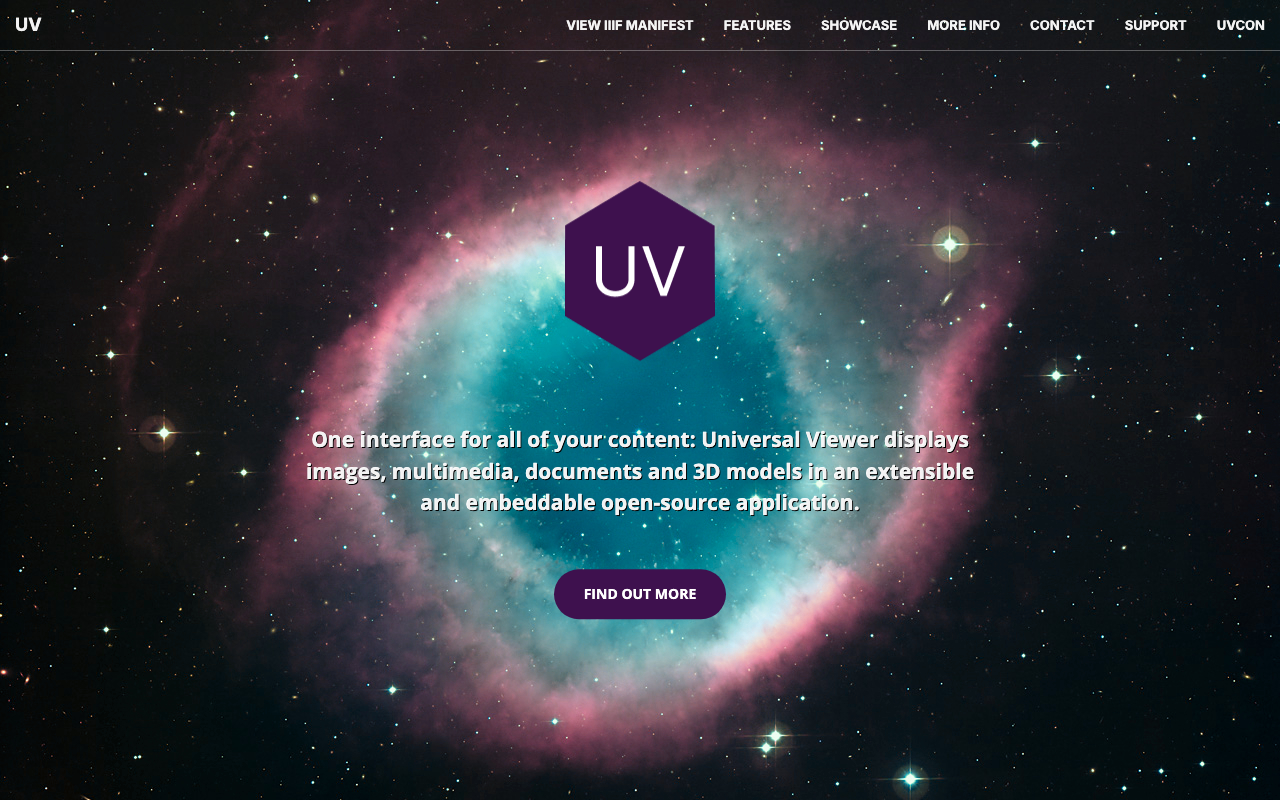
Fixing Universal Viewer 4.x "Unknown content type" Error with Local Hosting

The Problem In a Nuxt 3 project, I was using Universal Viewer (UV) embedded via iframe to display IIIF manifest images. The iframe source pointed to the external https://universalviewer.io/uv.html, but at some point the viewer stopped rendering entirely. The browser console showed these errors: SES Removing unpermitted intrinsics UV.js:2 Unknown content type Investigation universalviewer.io Redirect The first finding was that universalviewer.io now redirects to universalviewer.dev: <meta http-equiv="refresh" content="0; url=https://universalviewer.dev/uv.html"> Testing the same manifest URL on universalviewer.dev/uv.html produced the identical “Unknown content type” error. The issue was reproducible on the official site itself. ...

Digital Tale of Genji Video Subtitle Project: Publishing Bilingual Subtitles with IIIF v3 Manifests

Digital Tale of Genji Video Subtitle Project: Publishing Bilingual Subtitles with IIIF v3 Manifests

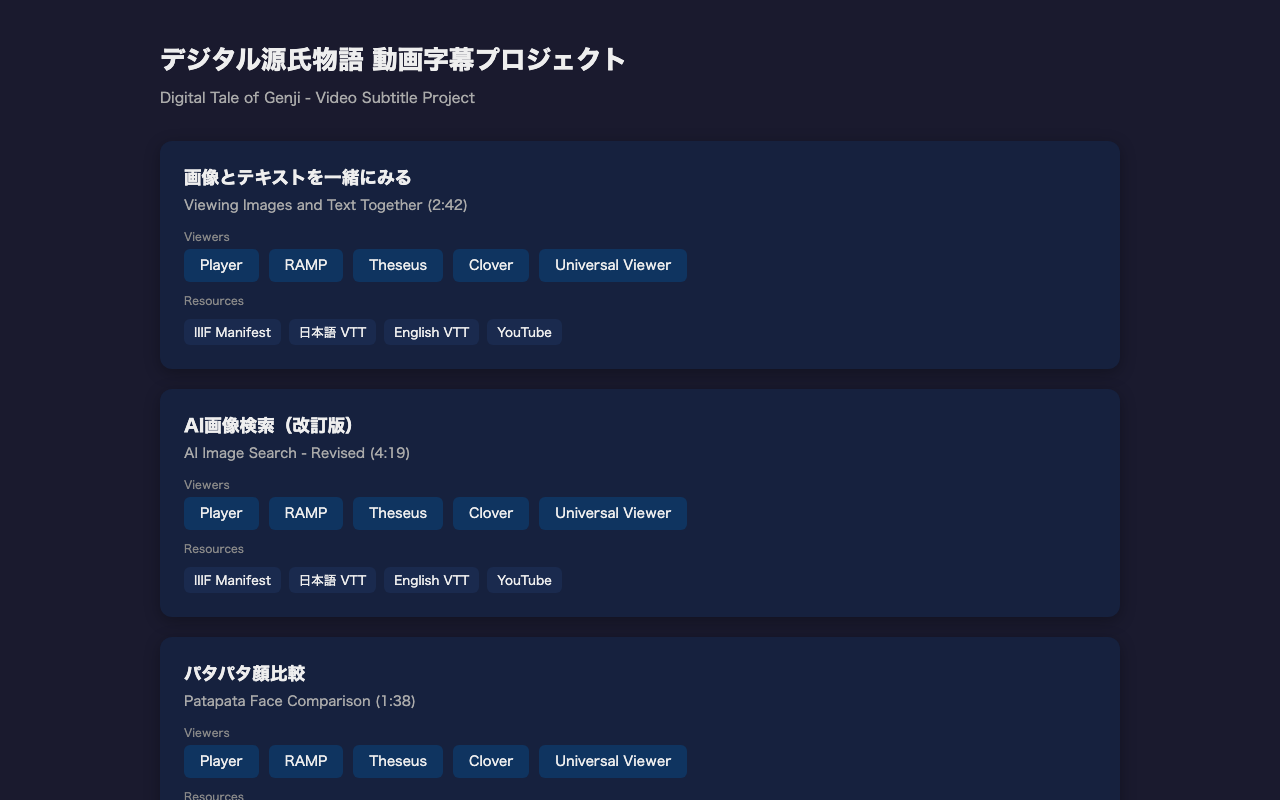
We created a project that adds Japanese and English bilingual subtitles to the Digital Tale of Genji tutorial videos and publishes them as IIIF v3 manifests. Demo: https://nakamura196.github.io/genji-movie/ GitHub: https://github.com/nakamura196/genji-movie Target Videos We added subtitles to the following three tutorial videos: Video Duration Description Viewing Images and Text Together 2:42 How to use the Parallel Text Viewer with TEI & IIIF AI Image Search (Revised) 4:19 Cross-searching manuscript images using kuzushiji OCR and similarity scoring Patapata Face Comparison 1:38 Comparing Genji Hyakunin Isshu illustrations using vdiff.js Bilingual Subtitles Each video has Japanese and English WebVTT subtitle files. Subtitles are split into single-sentence units for readability. ...

CATMA: A Guide to Web-Based Text Annotation and Analysis

CATMA: A Guide to Web-Based Text Annotation and Analysis

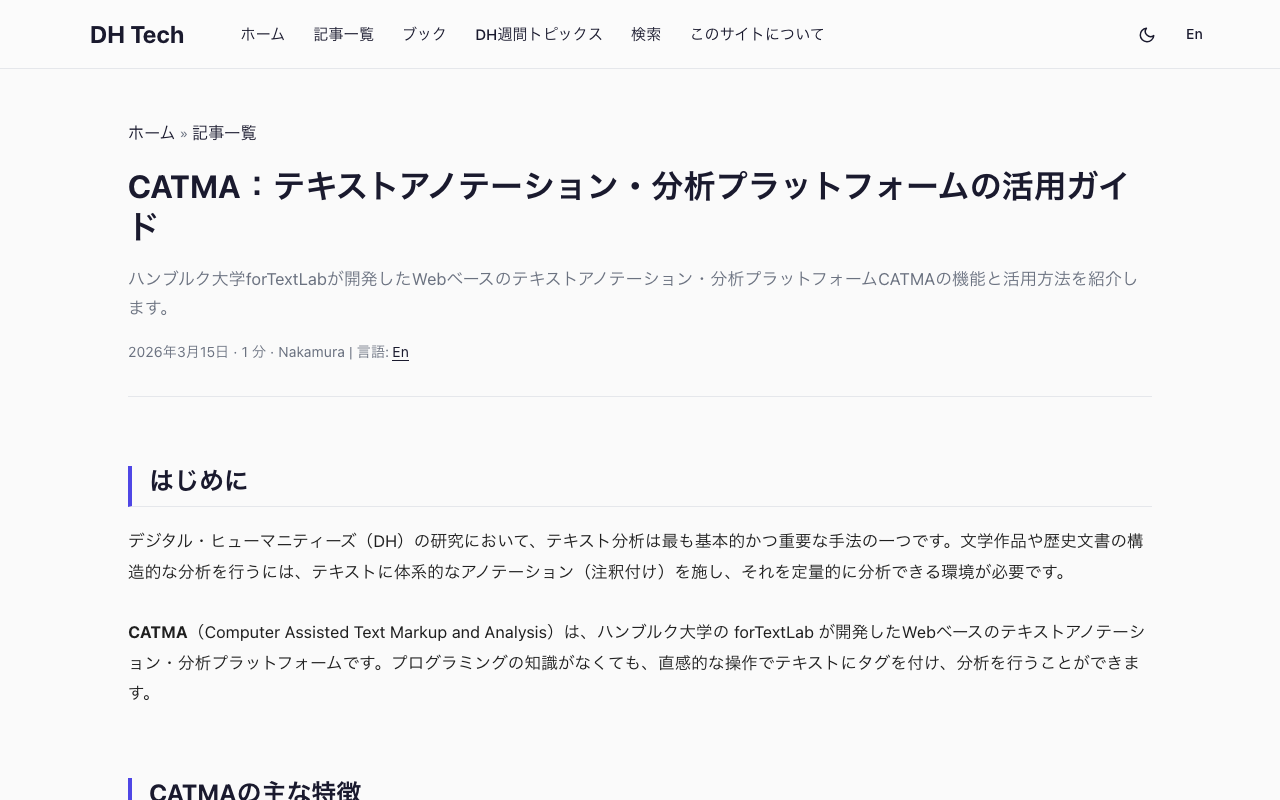
Introduction In Digital Humanities (DH) research, text analysis is one of the most fundamental and important methodologies. Conducting structural analysis of literary works and historical documents requires an environment where you can systematically annotate texts and analyze them quantitatively. CATMA (Computer Assisted Text Markup and Analysis) is a web-based text annotation and analysis platform developed by forTextLab at the University of Hamburg. It allows researchers to tag texts and perform analysis through an intuitive interface, without requiring any programming knowledge. ...

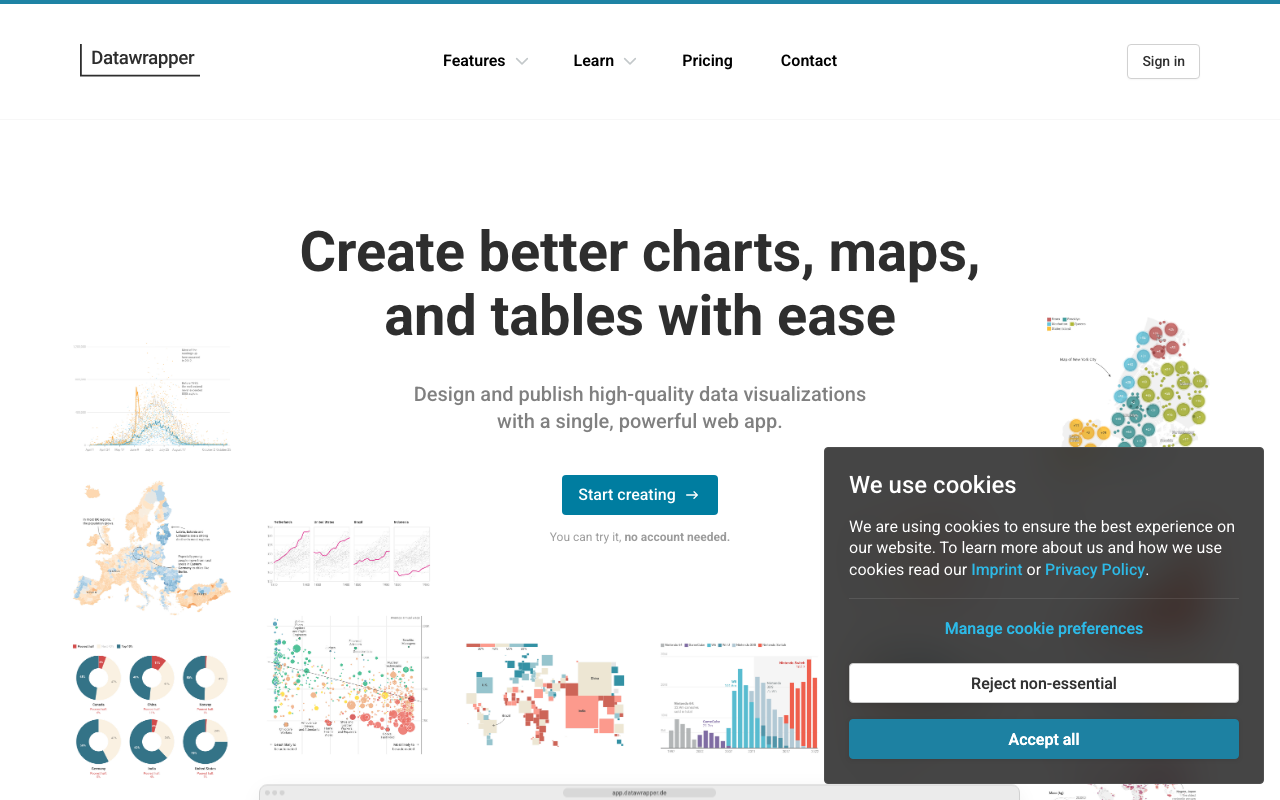
Datawrapper: A Data Visualization Tool for Researchers and Journalists

Datawrapper: A Data Visualization Tool for Researchers and Journalists

Introduction In Digital Humanities (DH) research, data visualization is an essential means of communicating analytical results. However, sophisticated visualization using tools like D3.js or Python’s Matplotlib requires programming knowledge. Datawrapper is a tool that lets you create professional charts, maps, and tables without any coding. It primarily targets journalists and researchers and is used by major media outlets such as The Washington Post and The Guardian. Key Features of Datawrapper 20+ Chart Types Datawrapper supports a wide range of visualization formats, from basic charts like bar graphs, line charts, and scatter plots to donut charts, area charts, and range plots. You can choose the optimal representation method to match the nature of your data. ...

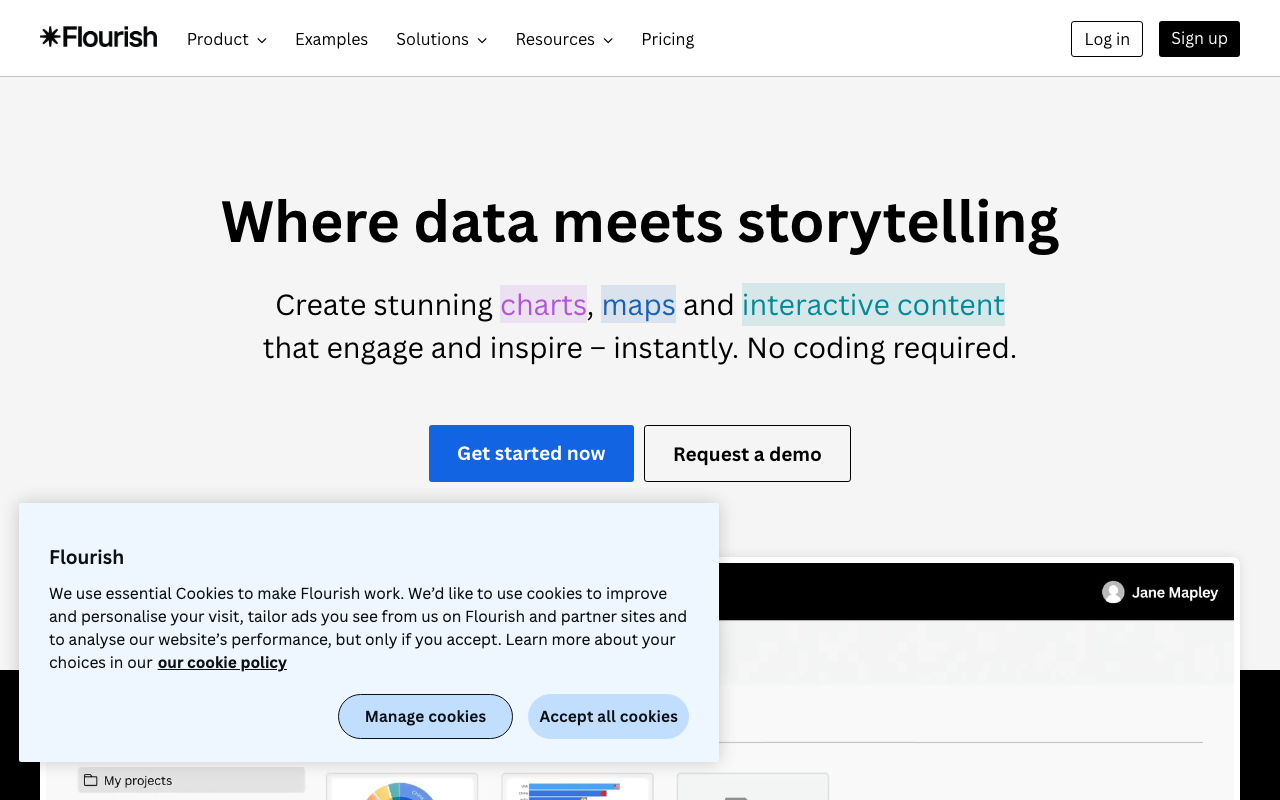
Flourish: An Interactive Data Storytelling Platform

Flourish: An Interactive Data Storytelling Platform

Introduction Data visualization is a powerful means of communicating information. However, static charts alone sometimes struggle to effectively convey temporal changes or complex stories. Flourish is a platform that enables data storytelling through animation and interaction. It makes it easy to create dynamic visualizations such as race charts (bar chart races) and animated maps. It is used by organizations including BBC, Google, and the World Bank, and offers a free plan. ...

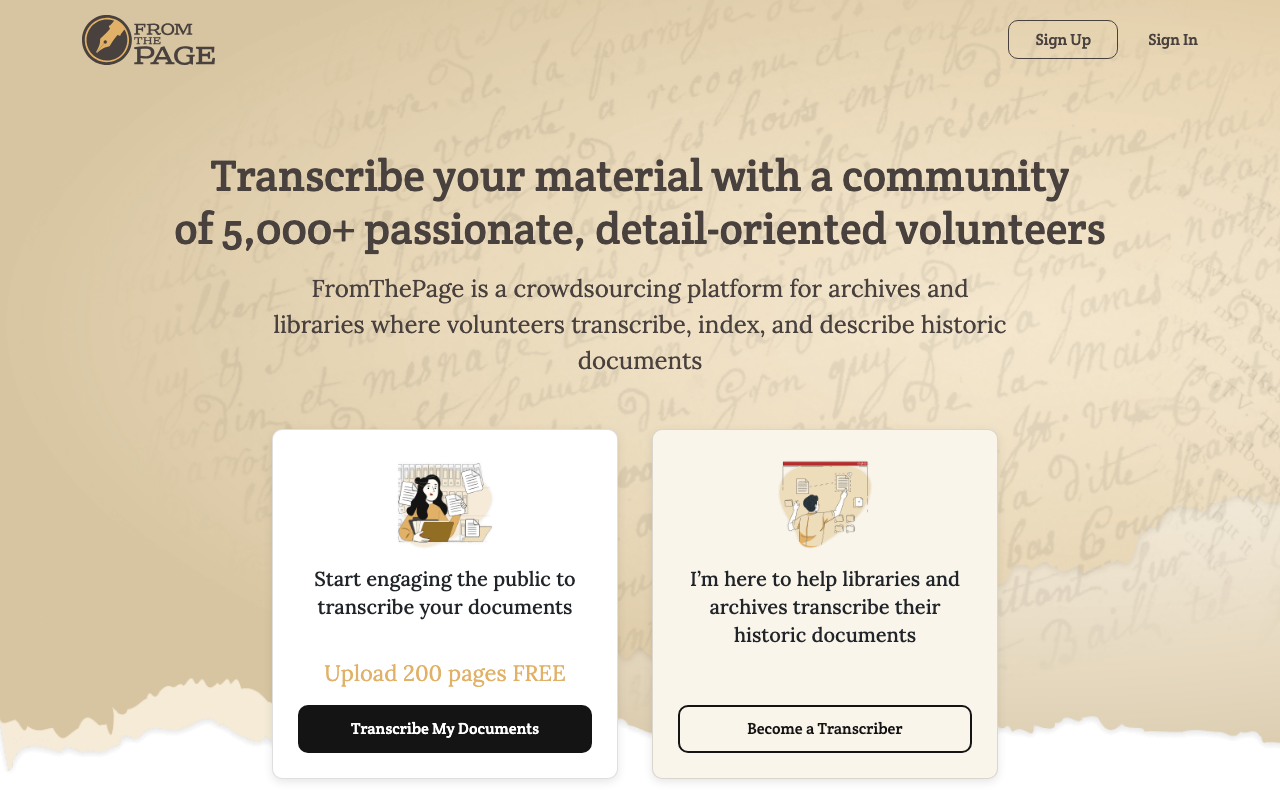
FromThePage: Crowdsourcing Transcription for Historical Documents

FromThePage: Crowdsourcing Transcription for Historical Documents

Introduction FromThePage is a web platform specialized for crowdsourced transcription of historical documents. It enables efficient management of the process of converting handwritten manuscripts and printed materials into text data with the help of volunteers. Adopted by libraries, museums, and archives worldwide—including the Library of Congress and the Smithsonian Institution—FromThePage has become a core tool for document digitization in Digital Humanities (DH). Key Features of FromThePage Crowdsourced Transcription The defining feature of FromThePage is the ability to conduct large-scale transcription projects through crowdsourcing. ...

Gephi Lite: Browser-Based Network Visualization for Digital Humanities

Gephi Lite: Browser-Based Network Visualization for Digital Humanities

TL;DR Gephi Lite is the browser version of Gephi, the renowned network visualization tool. Without any installation, you can load GEXF files and perform ForceAtlas2 layout, community detection, and various statistical calculations. It is ideal for network analysis commonly encountered in DH research — personal relationships, citation networks, co-occurrence networks, and more. What is Gephi Lite? Gephi is an open-source network visualization and analysis software released in 2008, often called the “Photoshop of networks” due to its widespread adoption. Gephi Lite is its browser-based version, enabling network analysis without installing a desktop application. ...

Hypothes.is: An Open-Source Web Annotation Tool Compliant with W3C Standards

Hypothes.is: An Open-Source Web Annotation Tool Compliant with W3C Standards

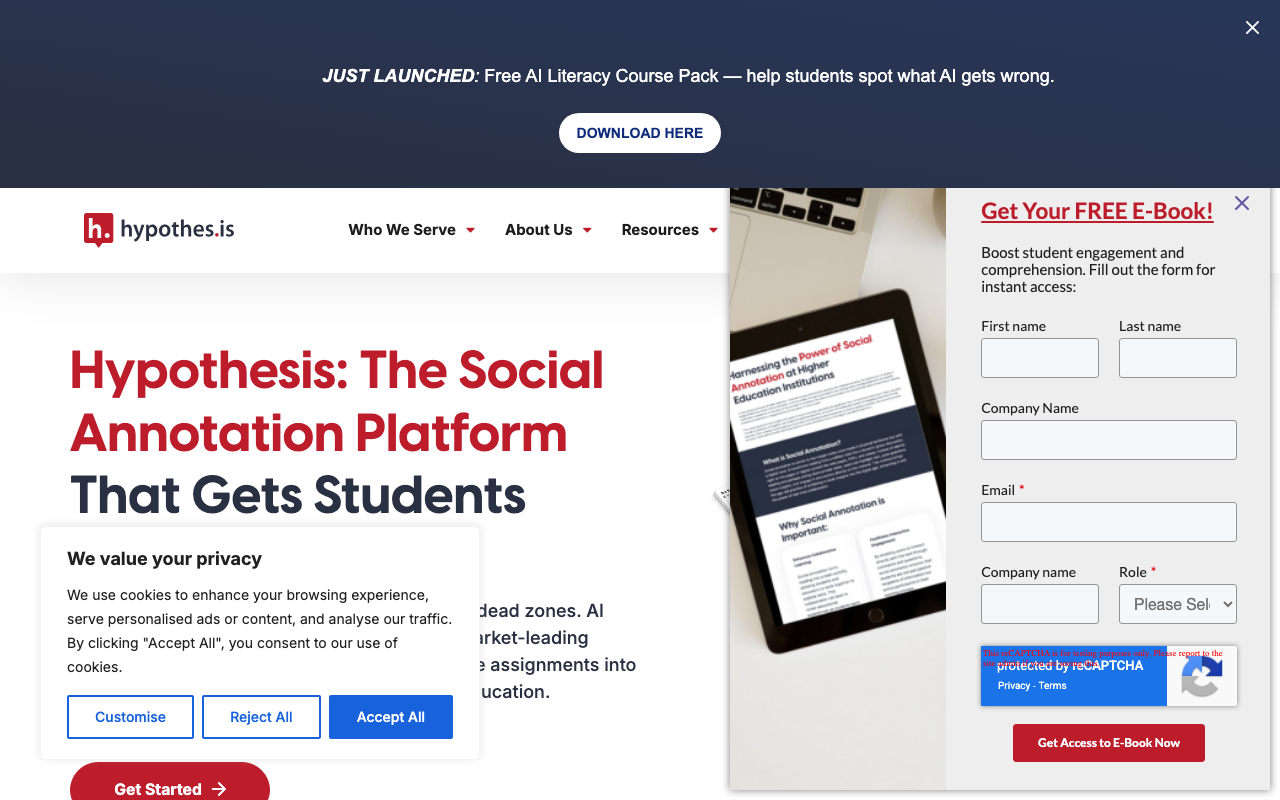
Introduction Close reading and annotation of texts are fundamental practices in humanities research. In the digital age, tools are needed to realize these practices in the context of the web. Hypothes.is is an open-source annotation tool that enables highlights and comments on any web page. It complies with the W3C Web Annotation standard and is used across a wide range of fields including education, research, and journalism. It is released under the BSD license. ...

Internet Archive: Leveraging the World's Largest Digital Archive

Internet Archive: Leveraging the World's Largest Digital Archive

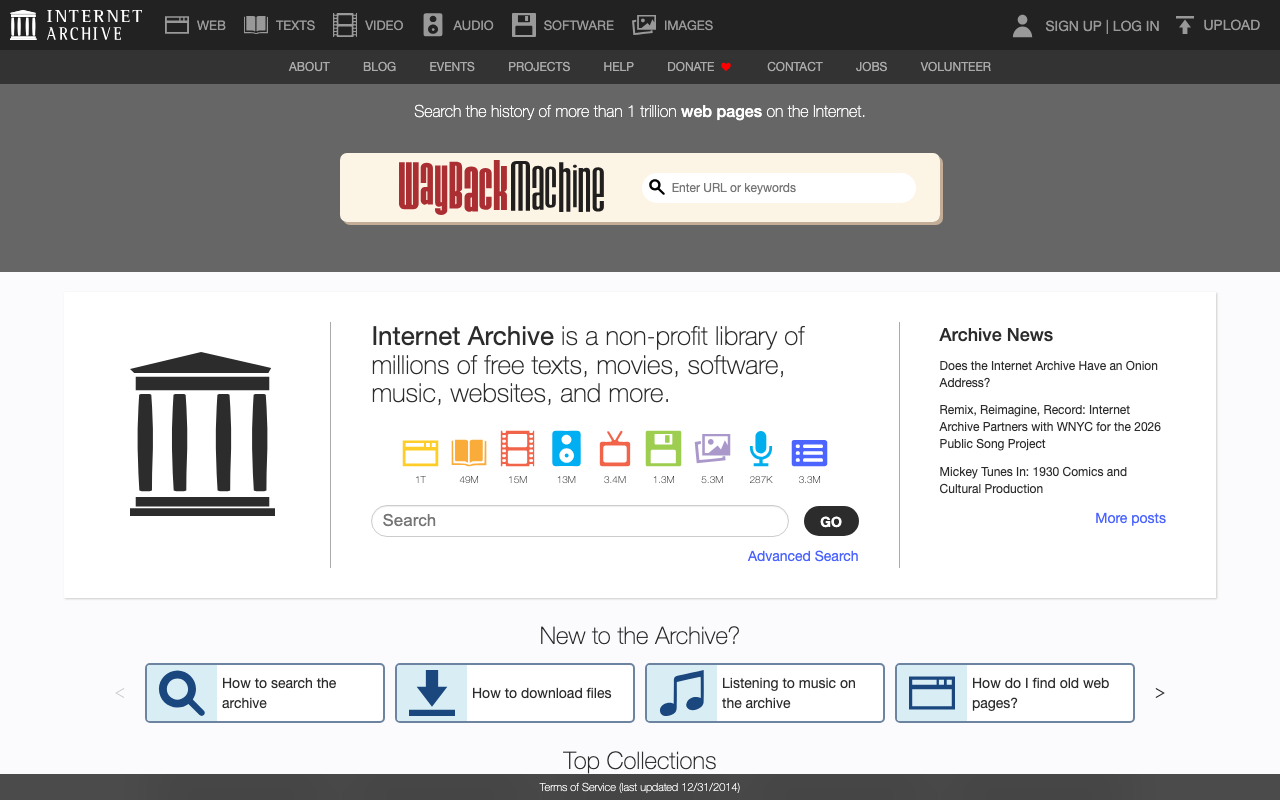
Introduction Internet Archive is the world’s largest digital archive, operated by a non-profit organization founded by Brewster Kahle in 1996. With its mission of “Universal Access to All Knowledge,” it provides free access to billions of digital items, including web pages, books, audio, video, and software. For Digital Humanities (DH) researchers, Internet Archive serves as a critical infrastructure supporting diverse research activities—from accessing primary sources and analyzing the historical evolution of the web to building large-scale text corpora. ...

Kepler.gl: An Open-Source Tool for Beautiful Large-Scale Geospatial Data Visualization

Kepler.gl: An Open-Source Tool for Beautiful Large-Scale Geospatial Data Visualization

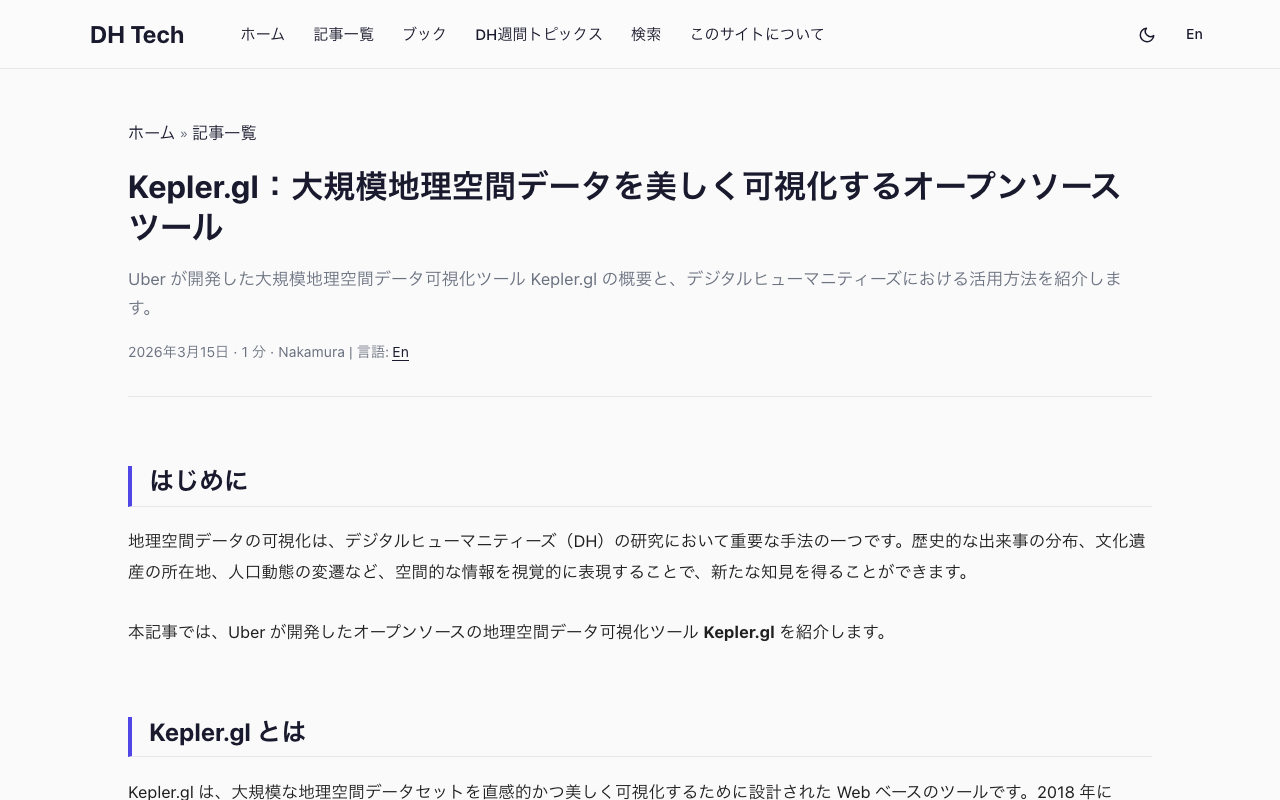
Introduction Geospatial data visualization is a crucial methodology in Digital Humanities (DH) research. Visually representing spatial information — such as the distribution of historical events, locations of cultural heritage sites, and demographic transitions — can yield new insights. This article introduces Kepler.gl, an open-source geospatial data visualization tool developed by Uber. What is Kepler.gl? Kepler.gl is a web-based tool designed for intuitive and visually stunning visualization of large-scale geospatial datasets. It was open-sourced in 2018 by Uber’s visualization team and is available under the MIT License, making it free to use and modify. ...

Observable: Data Visualization Notebooks by the Creator of D3.js

Observable: Data Visualization Notebooks by the Creator of D3.js

Introduction Observable is a JavaScript-based data analysis and visualization notebook platform developed by Mike Bostock, the creator of D3.js. It provides an environment where you can write reactive code in the browser and instantly create interactive data visualizations. In the field of Digital Humanities (DH), Observable has gained attention as a powerful tool for exploratory data analysis and creating interactive visualizations of research data. Key Features of Observable Reactive Notebooks Observable notebooks share concepts with Jupyter Notebooks but adopt a JavaScript-based reactive execution model. ...

Omeka: A Platform for Digital Collections and Online Exhibitions

Omeka: A Platform for Digital Collections and Online Exhibitions

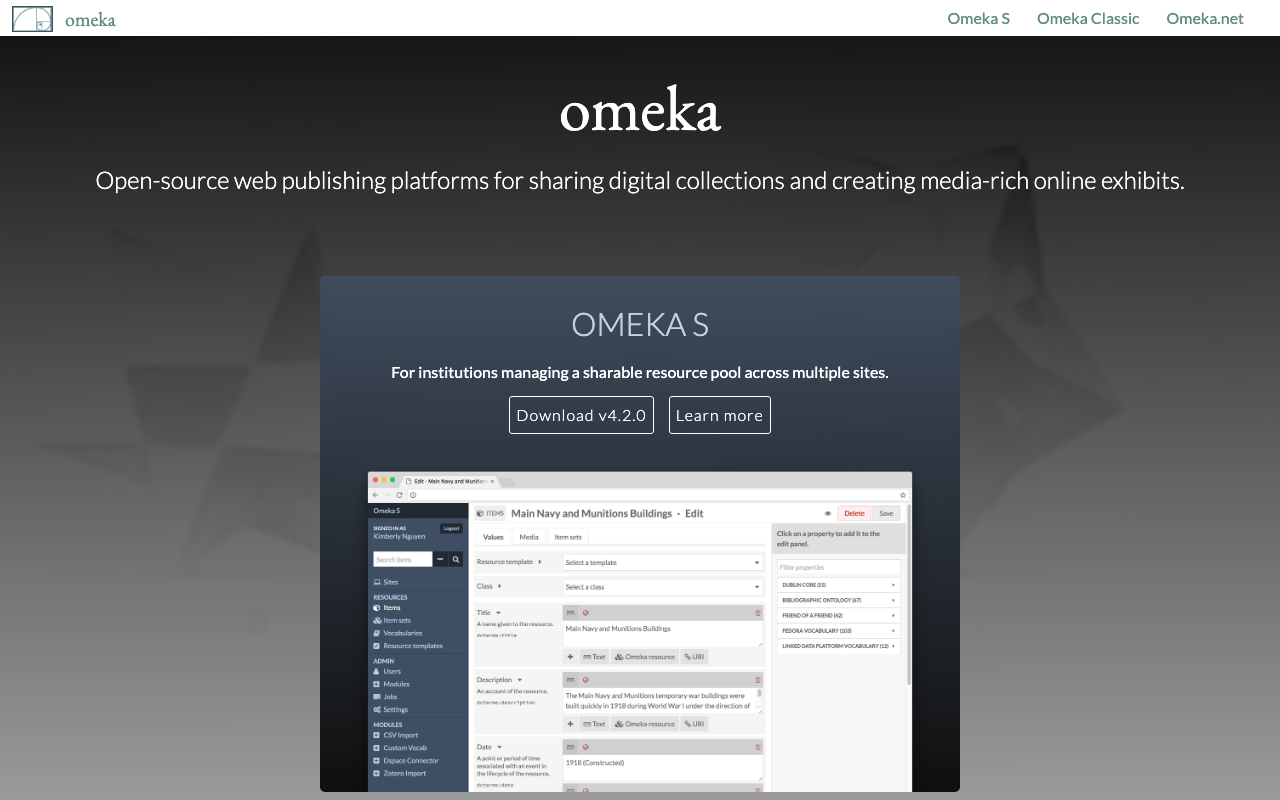
TL;DR Omeka is an open-source web platform designed for cultural heritage institutions such as libraries, museums, and universities. It specializes in managing digital collections and building online exhibitions, with two versions available: Omeka S (the latest version with Linked Data support) and Omeka Classic (the simpler legacy version). It is released under the GPL license. What is Omeka? Omeka is a web publishing platform developed by the Roy Rosenzweig Center for History and New Media (RRCHNM) at George Mason University. Its name derives from a Swahili word meaning “to display” — fitting for a platform optimized for publishing and exhibiting digital materials. ...

Palladio: A Guide to Humanities Data Visualization

Palladio: A Guide to Humanities Data Visualization

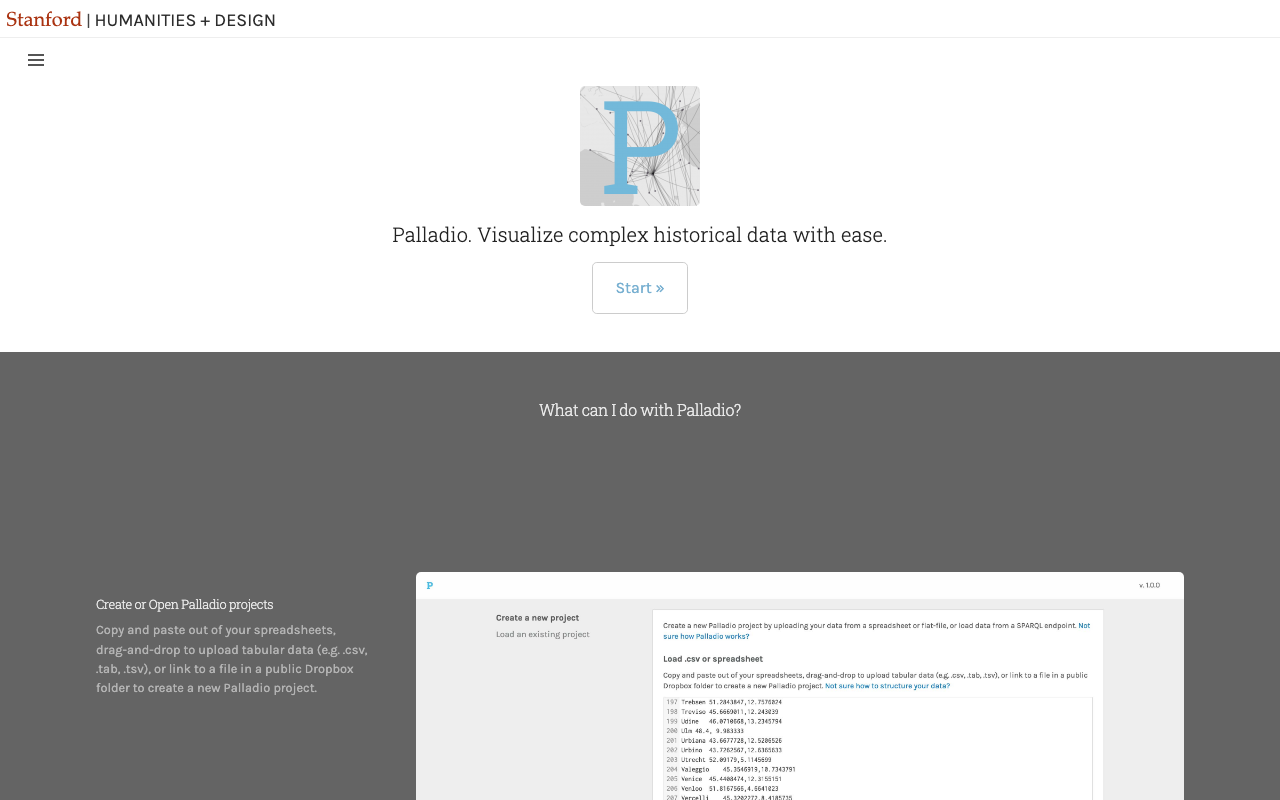
Introduction In historical and humanities research, visualizing data such as travel routes, correspondence networks, and chronological events is an important means of gaining new insights. However, GIS software and programmatic data visualization have traditionally been high barriers for many humanities researchers. Palladio is a web-based data visualization platform developed by the Humanities+Design Lab at Stanford University. Simply upload a CSV file, and you can explore your data through multiple views: maps, graphs, tables, and timelines. ...

RAWGraphs: A No-Code Data Visualization Tool for Digital Humanities

RAWGraphs: A No-Code Data Visualization Tool for Digital Humanities

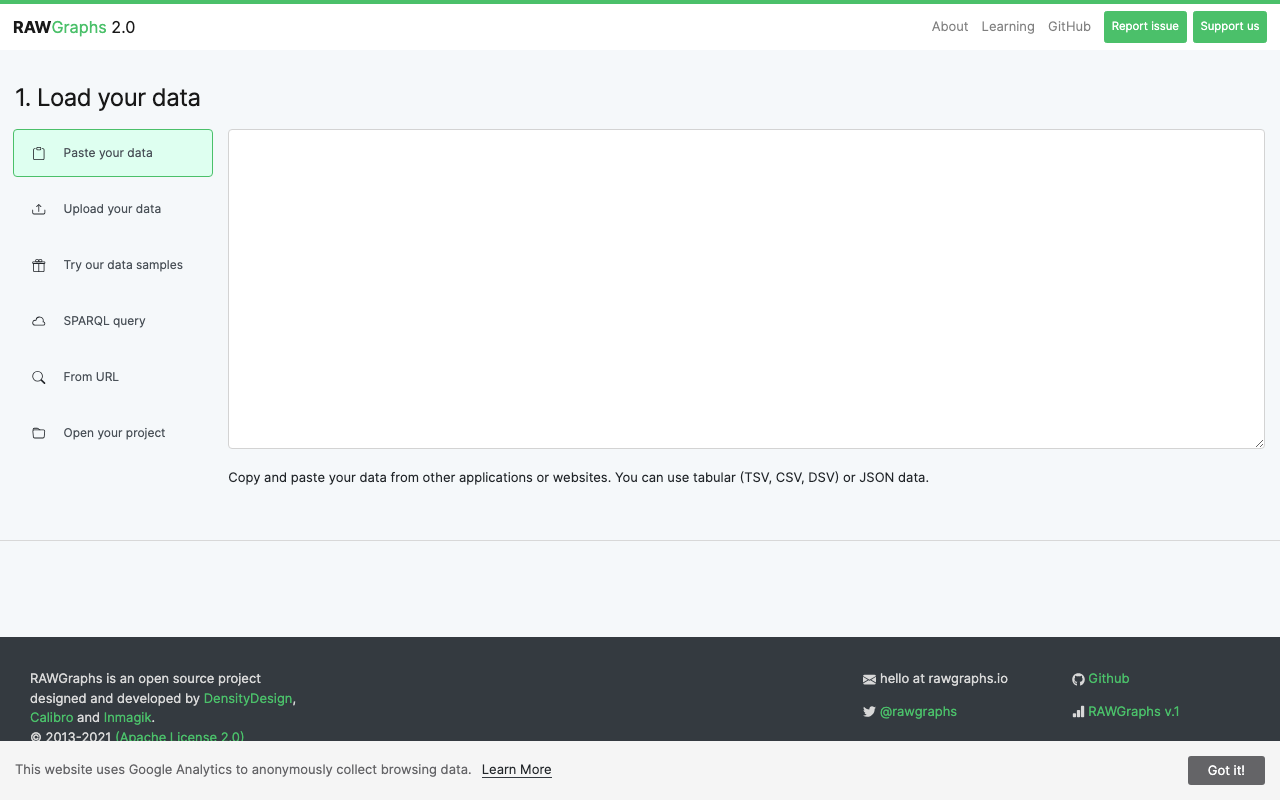
TL;DR RAWGraphs is an open-source, browser-based data visualization tool. Simply drag and drop a CSV/TSV file to create over 30 types of charts, then export them as SVG or PNG. No programming required — making it an ideal entry point for data analysis in Digital Humanities (DH) research. What is RAWGraphs? RAWGraphs is an open-source project developed by the DensityDesign Lab at Politecnico di Milano, Italy. It is released under the Apache 2.0 license and is free for anyone to use. ...

ReplayWeb.page: A Browser-Based Web Archive Replay Tool

ReplayWeb.page: A Browser-Based Web Archive Replay Tool

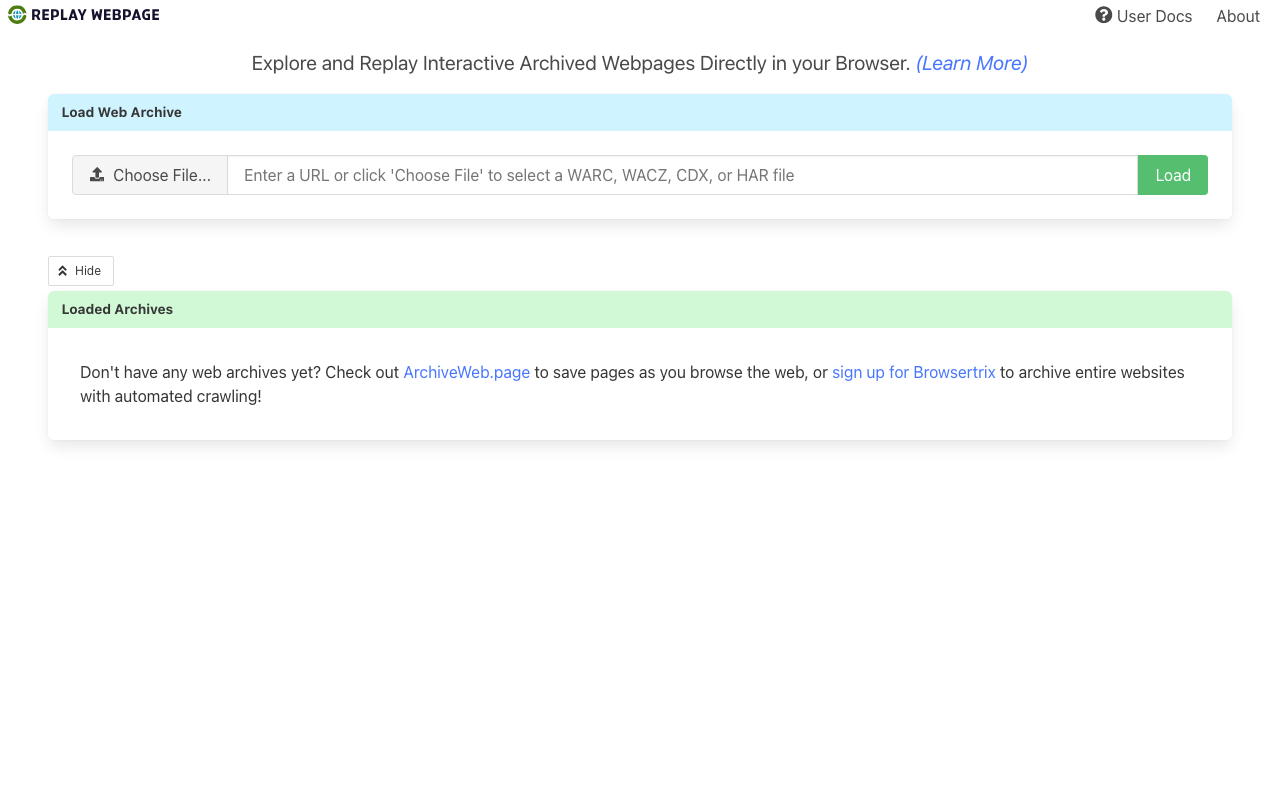
Introduction In Digital Humanities, preserving and reproducing web content is a critical challenge. Websites are constantly updated and disappear, requiring mechanisms for long-term preservation of web pages as research subjects. ReplayWeb.page is a browser-based web archive replay tool developed by the Webrecorder project. It allows you to view archive files in WARC (Web ARChive) and WACZ (Web Archive Collection Zipped) formats directly in your browser. Key Features of ReplayWeb.page Client-Side Processing The most distinctive feature is its client-side processing using Service Workers. Traditional web archive replay tools (like the Wayback Machine) require server-side processing, but ReplayWeb.page completes all processing within the browser. This eliminates the need to build and maintain servers. ...

StoryMapJS: A Guide to Map-Based Storytelling

StoryMapJS: A Guide to Map-Based Storytelling

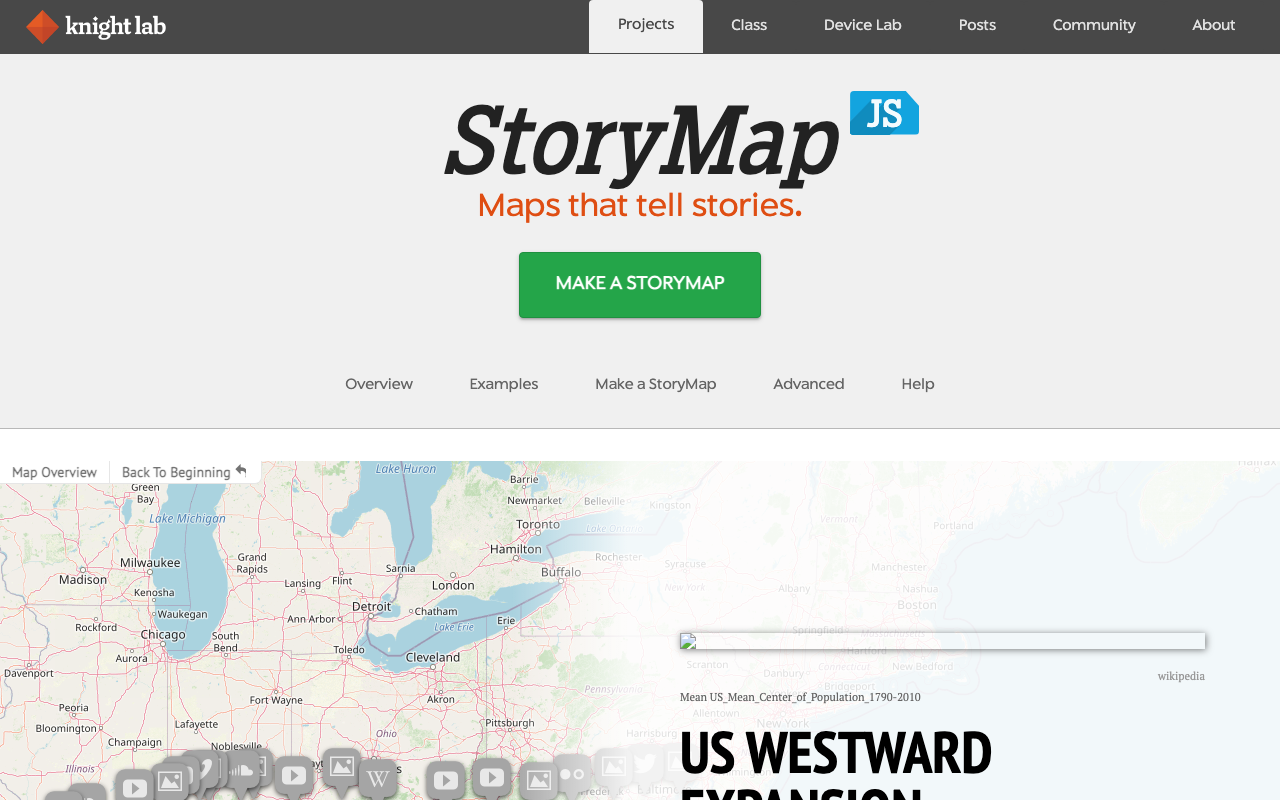
Introduction When telling stories tied to place — historical journeys, exploration records, cultural heritage distributions — map-based storytelling is remarkably effective. By sequentially tracing points on a map while displaying text and images at each location, readers can immerse themselves in the narrative while understanding its spatial context. StoryMapJS is a map-based storytelling tool developed by the Knight Lab at Northwestern University. Using a slide-based interface, you can create interactive narratives that journey through points on a map. It is licensed under MPL-2.0 and free to use. ...

Taguette: A Free Open-Source Qualitative Data Analysis Tool

Taguette: A Free Open-Source Qualitative Data Analysis Tool

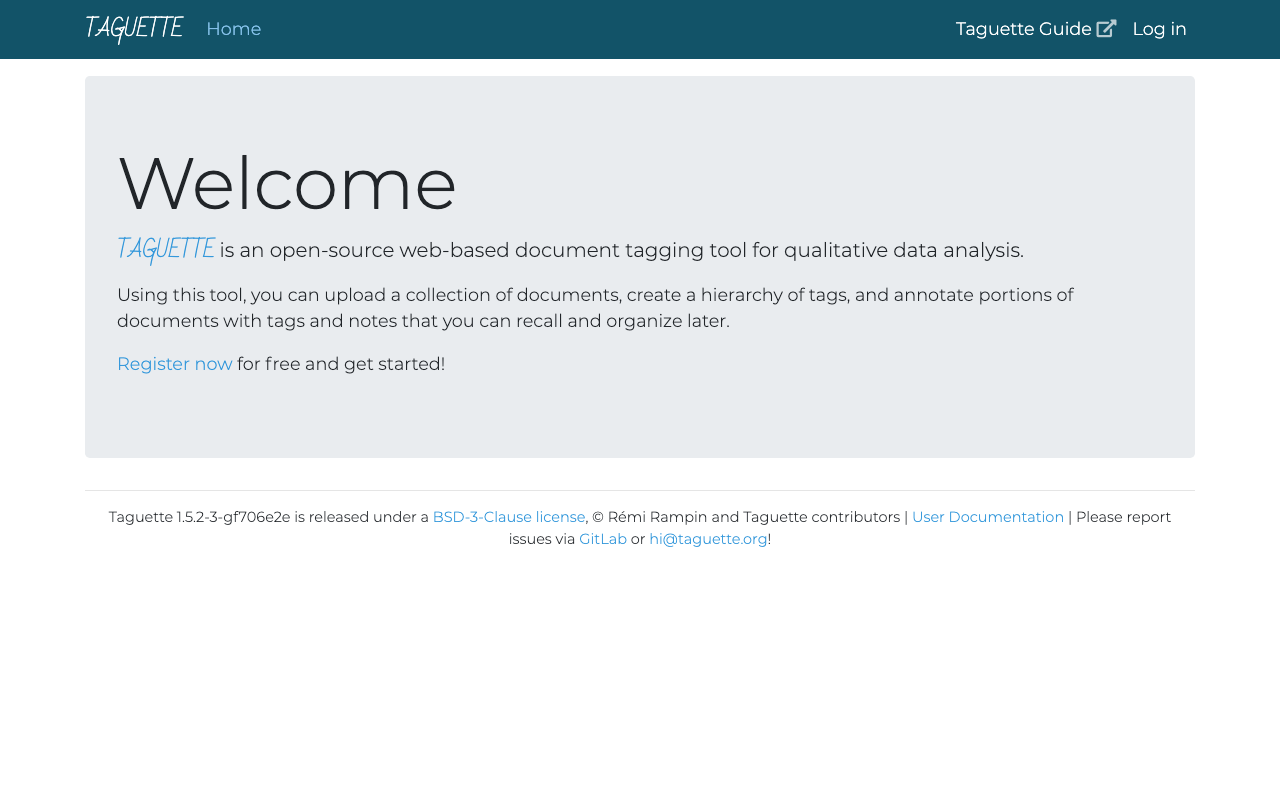
Introduction Qualitative Data Analysis (QDA) is a research methodology that involves assigning tags or codes to text data — such as interview transcripts, field notes, and historical documents — to identify patterns and themes. Traditionally, commercial software like NVivo and ATLAS.ti has been widely used, but their expensive license fees can be a barrier for researchers and students. This article introduces Taguette, a free open-source qualitative data analysis tool that has gained attention as an alternative to NVivo and ATLAS.ti. ...

TEI Publisher: A Platform for Publishing TEI XML Digital Editions

TEI Publisher: A Platform for Publishing TEI XML Digital Editions

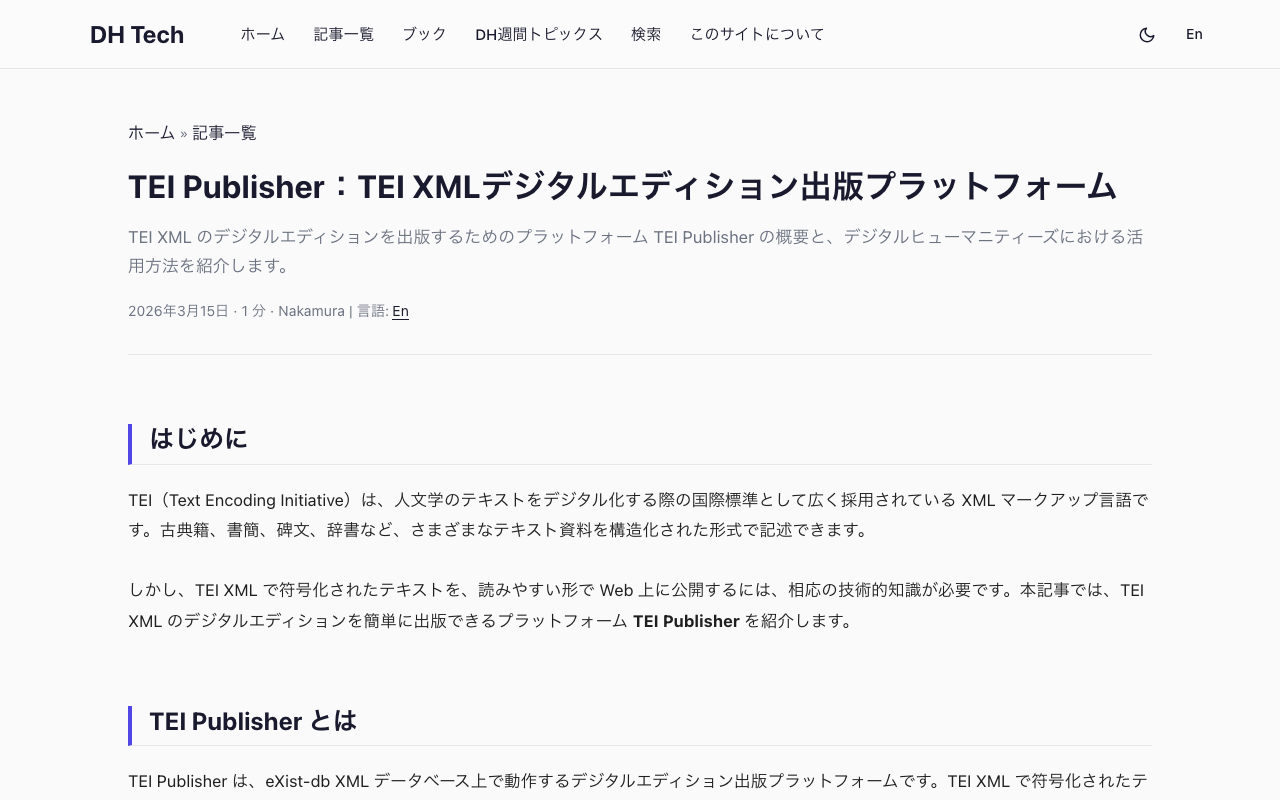
Introduction TEI (Text Encoding Initiative) is an XML markup language widely adopted as the international standard for digitizing humanities texts. It can describe various textual materials — including classical texts, letters, inscriptions, and dictionaries — in a structured format. However, publishing TEI XML-encoded texts on the web in a readable format requires considerable technical expertise. This article introduces TEI Publisher, a platform that makes it easy to publish TEI XML digital editions. ...

TimelineJS: Create Interactive Timelines from Spreadsheets

TimelineJS: Create Interactive Timelines from Spreadsheets

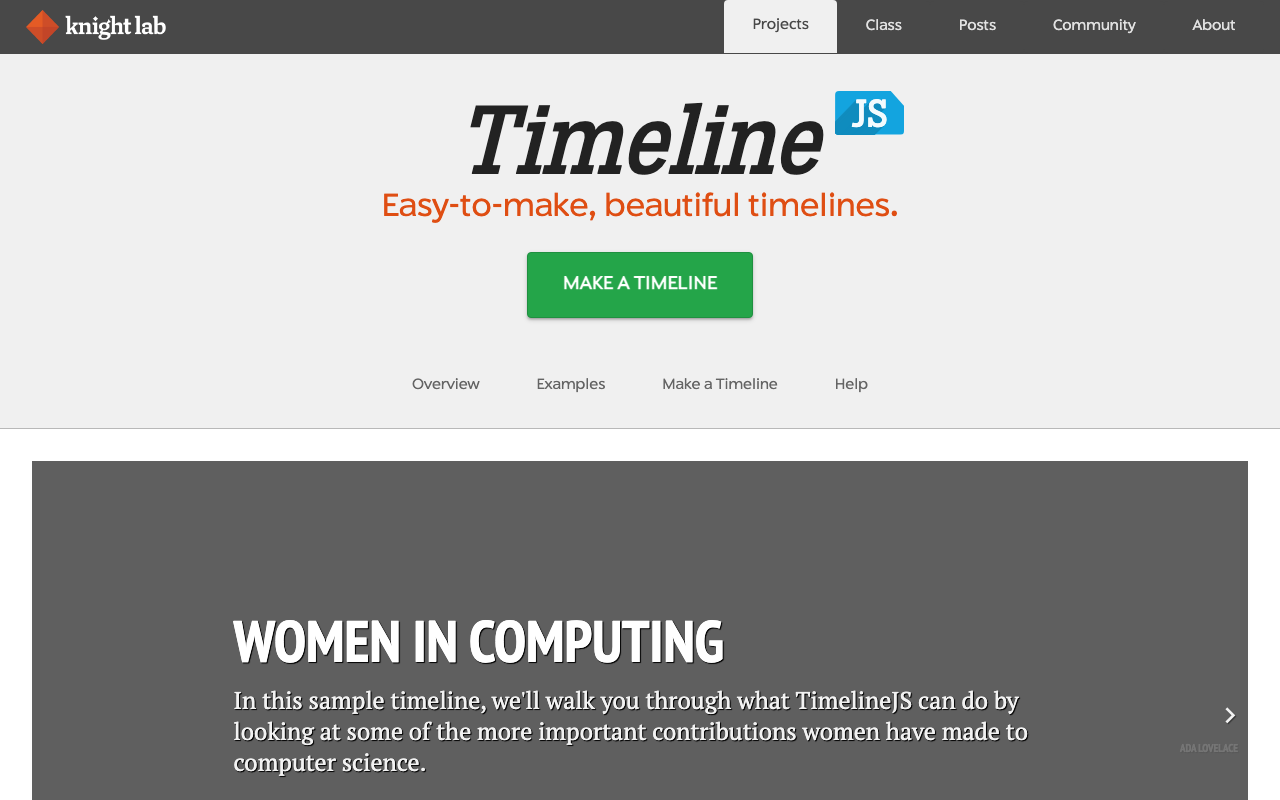
Introduction Timelines are one of the most effective ways to communicate the flow of historical events or the progression of a project. However, creating visually appealing interactive timelines typically requires programming knowledge. TimelineJS is an open-source timeline creation tool developed by the Knight Lab at Northwestern University. Simply enter data into a Google Spreadsheet to automatically generate beautiful, interactive timelines. It is licensed under MPL-2.0 and free to use. Features of TimelineJS 1. No Programming Required TimelineJS’s greatest appeal is the ability to create timelines without writing any code. Simply enter data into the Google Spreadsheet template provided by Knight Lab, configure sharing settings, and you’re done. ...