Home Articles Books Search About
日本語
Wikidata Query Service: Exploring Knowledge Graphs with SPARQL

Wikidata Query Service: Exploring Knowledge Graphs with SPARQL

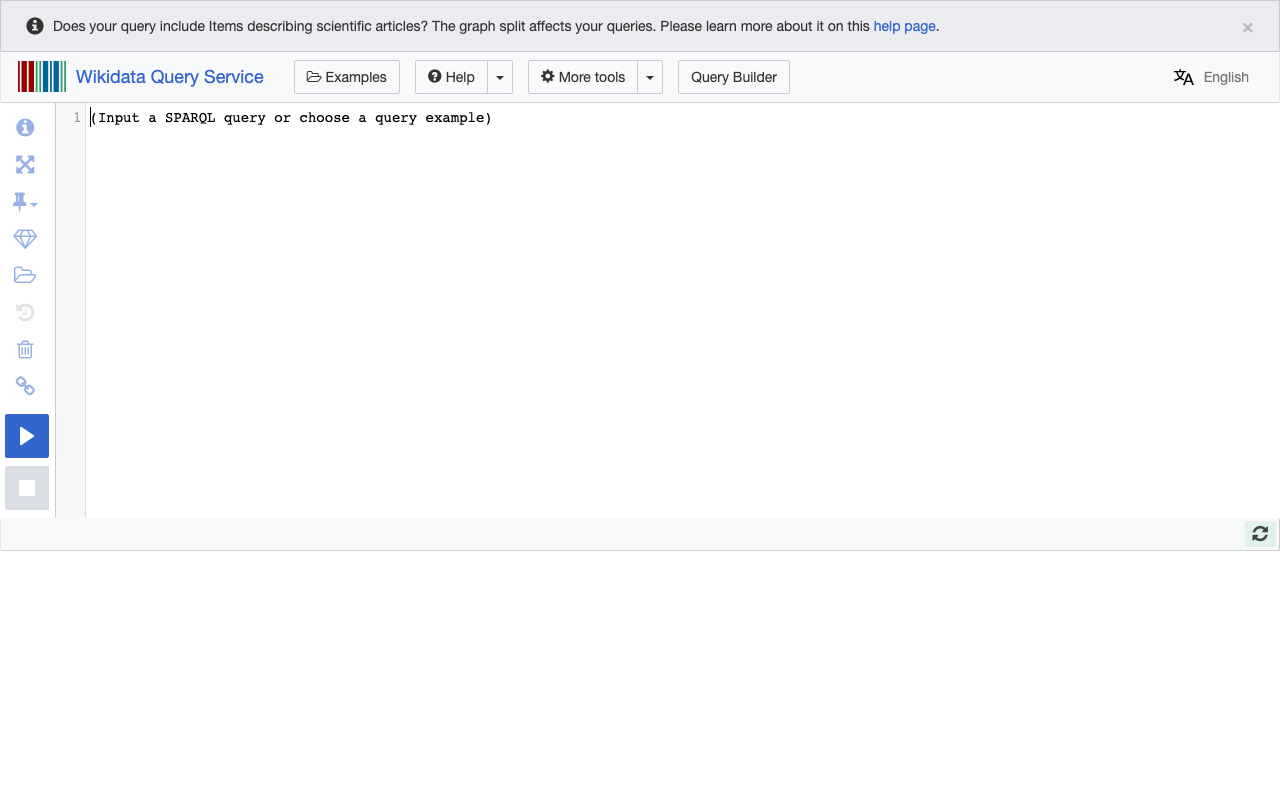
Introduction In Digital Humanities research, structured data is an extremely valuable resource. When information about people, places, works, and events is organized in a machine-readable format, large-scale data analysis and cross-dataset integration become possible. Wikidata is a free knowledge base operated by the Wikimedia Foundation, containing over 100 million items. The Wikidata Query Service is a free web service that allows you to execute SPARQL queries against this database and visualize results in various formats. ...
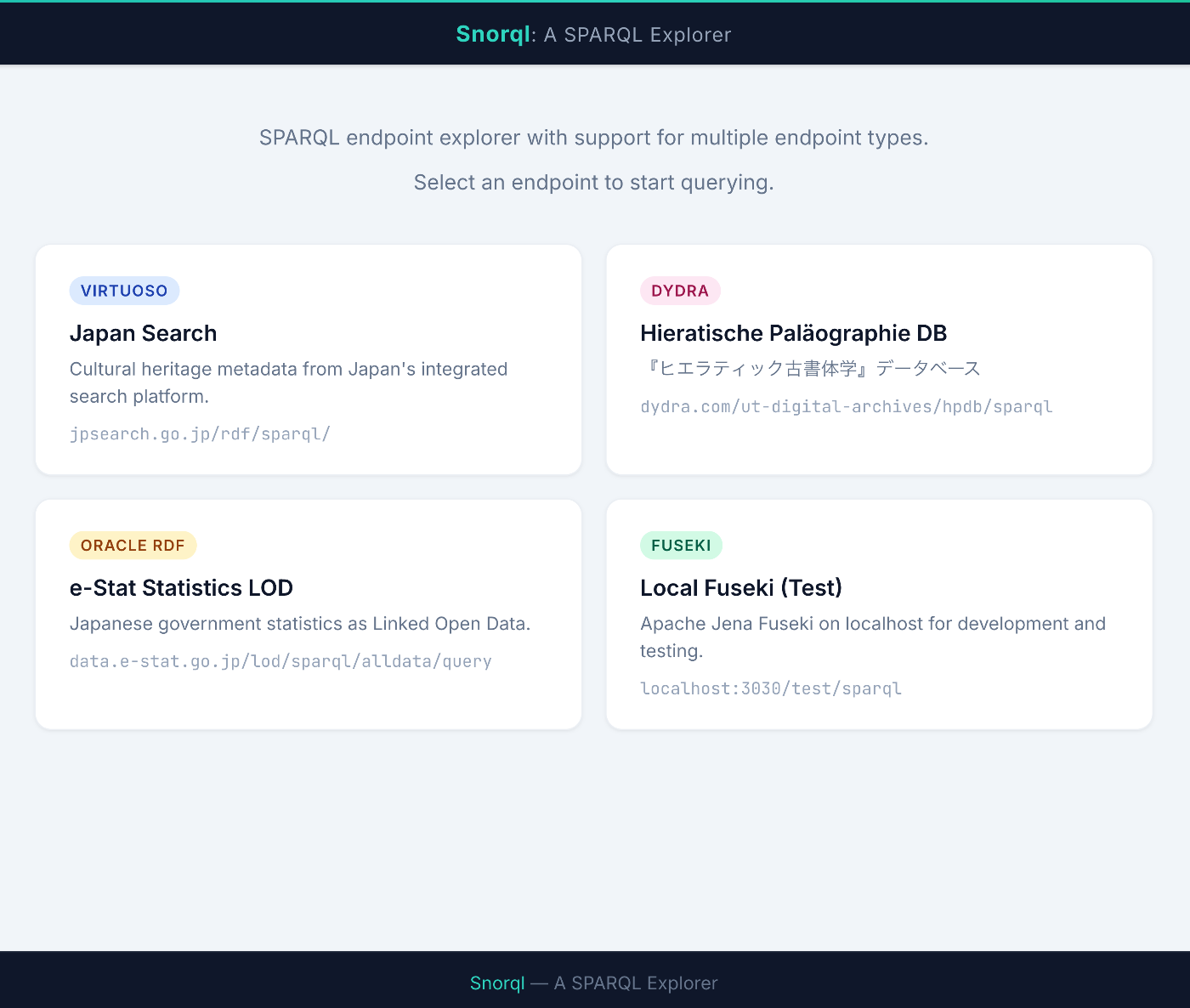
Snorql -- Published a Browser UI for Easily Exploring Multiple SPARQL Endpoints

Snorql -- Published a Browser UI for Easily Exploring Multiple SPARQL Endpoints

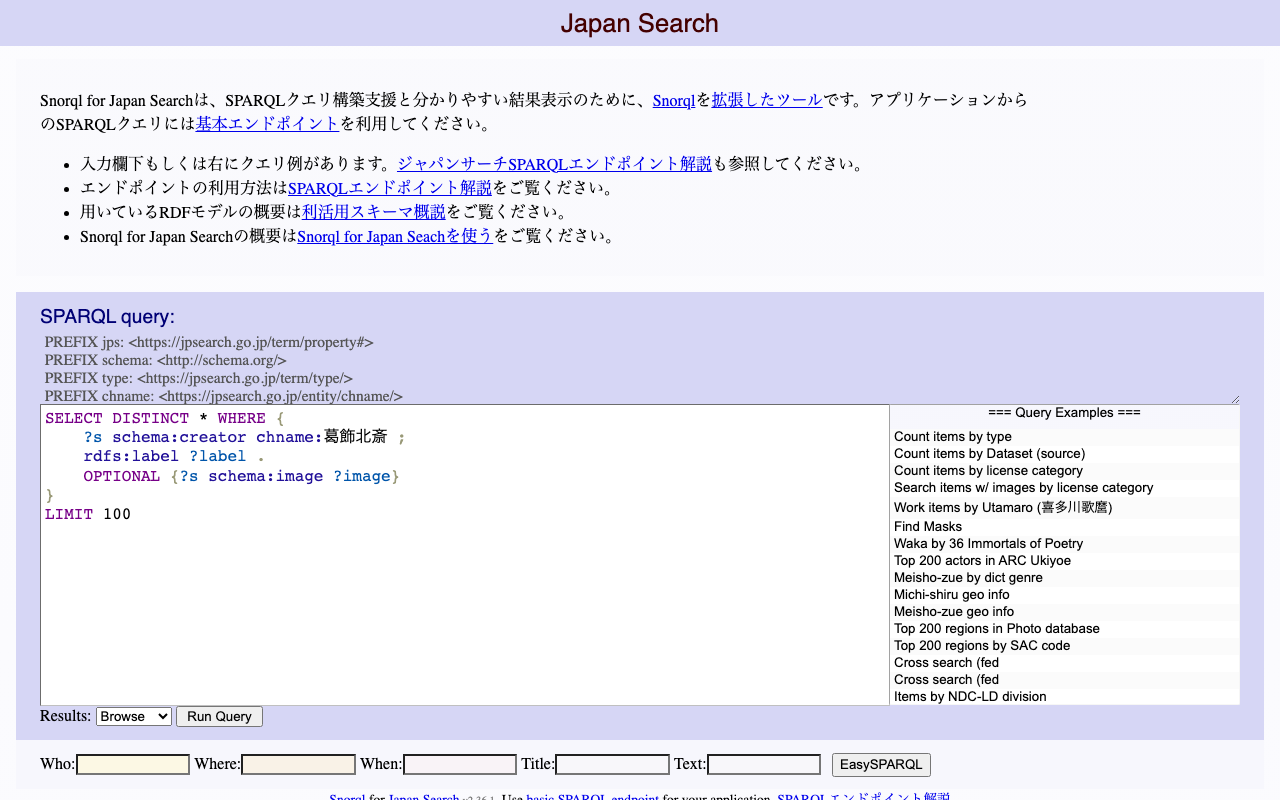
Snorql — A Browser-Based UI for Exploring Multiple SPARQL Endpoints https://nakamura196.github.io/snorql/ Introduction Have you ever wanted a quick, easy way to try out SPARQL endpoints? SPARQL is the standard query language for searching Linked Open Data (LOD), but each endpoint often has a different UI — or none at all. To solve this, I published Snorql, a tool that lets you switch between multiple endpoints from a single, unified UI. ...

Odeuropa Visualization: A Platform for Visualizing Scent Data Using SKOS Vocabularies and SPARQL

Odeuropa Visualization: A Platform for Visualizing Scent Data Using SKOS Vocabularies and SPARQL

Introduction Odeuropa is a project that studies the history of scents in Europe, collecting and analyzing representations of scents depicted in paintings, literature, and other historical sources. This article introduces the implementation of a web application for visualizing scent data based on the SKOS (Simple Knowledge Organization System) vocabulary, utilizing Odeuropa’s SPARQL endpoint. https://odeuropa-seven.vercel.app/ja/ Project Overview Technology Stack Frontend: Next.js 15 (App Router) UI: Material-UI v5 Internationalization: next-intl Data Retrieval: SPARQL queries (Odeuropa SPARQL endpoint) Language: TypeScript Hosting: Static Site Generation (SSG) Main Features 1. Scent Search (/odeuropa-sources) This is the core feature of the application, allowing users to search and browse smell perception events collected by the Odeuropa project. ...

Odeuropa: The World of Linked Data for Extracting Scents from Historical Documents

Odeuropa: The World of Linked Data for Extracting Scents from Historical Documents

Overview Odeuropa is a unique project that extracts descriptions of “scents” from European historical documents and structures them as Linked Data. This article explores the actual data through the SPARQL endpoint, revealing its structure and design philosophy. What is Odeuropa? Project name: Odeuropa (Odeurs d’Europe = Scents of Europe) Database URL: https://data.odeuropa.eu/ SPARQL endpoint: https://data.odeuropa.eu/repositories/odeuropa Web interface: https://explorer.odeuropa.eu/ Data Model Overview Odeuropa uses an extended ontology specialized for scents, built on top of CIDOC-CRM (Conceptual Reference Model for Cultural Heritage). ...

Trying grlc (git repository linked data API constructor)

Trying grlc (git repository linked data API constructor)

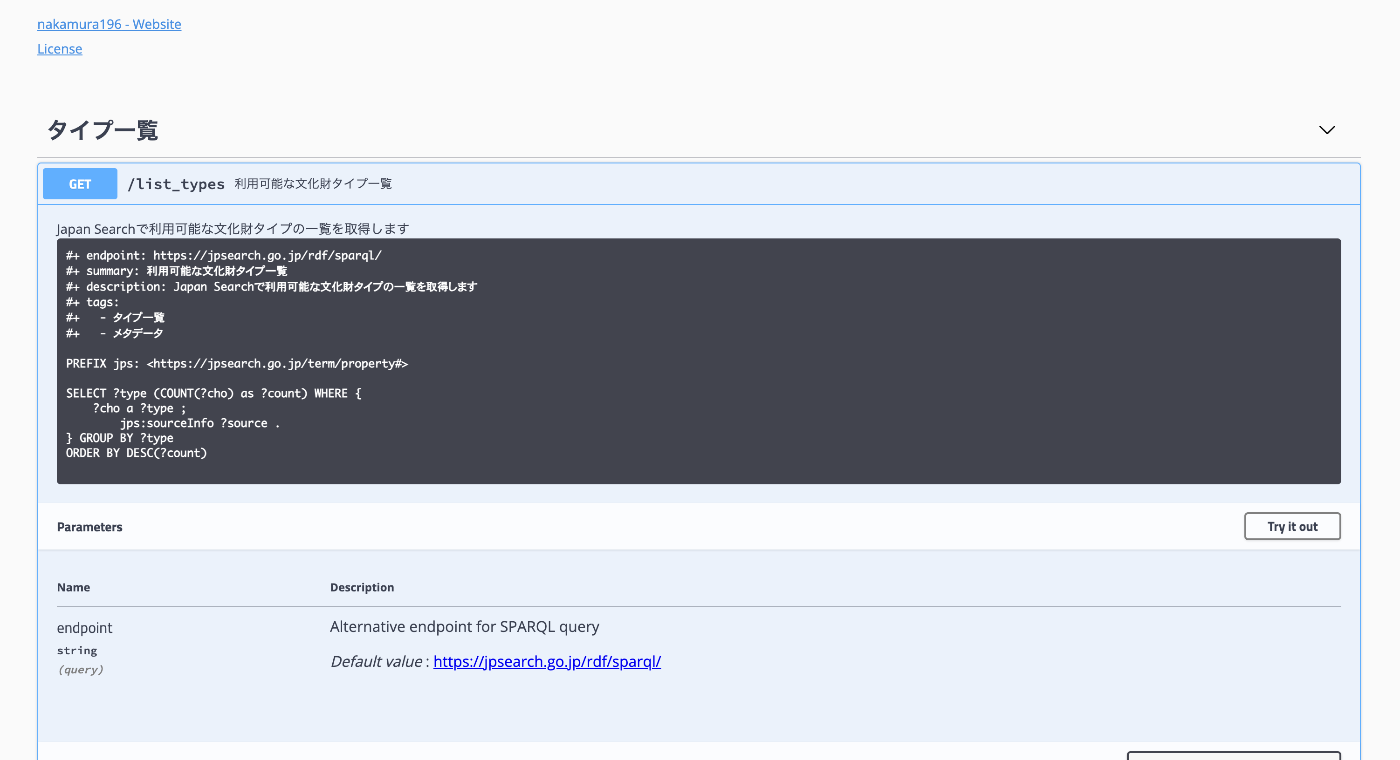
Overview The GitHub repository for grlc is as follows. https://github.com/CLARIAH/grlc It is described as follows. grlc, the git repository linked data API constructor, automatically builds Web APIs using shared SPARQL queries. I tried out this tool, so here are my notes. The API endpoint created targeting the Japan Search SPARQL Endpoint is as follows. https://grlc.io/api-git/nakamura196/grlc-jps Background While researching Odeuropa, I found this tool mentioned on the following page. https://odeuropa.eu/nosebooks/ ...

Trying AllegroGraph

Trying AllegroGraph

Overview I had the opportunity to try AllegroGraph, so this is a memo of my experience. https://allegrograph.com/ Usage There appear to be several setup methods, but I will try the following cloud version. https://allegrograph.cloud/ After setup, the following screen is displayed. After logging in, multiple repositories are displayed. Enabling Anonymous Access For example, the SPARQL endpoint for the “actors” repository is: https://ag1edt2www58hzzy.allegrograph.cloud/repositories/actors/sparql By default, Basic authentication is required. ...

Counting Triples in an RDF Store 2: Co-occurrence Frequency

Counting Triples in an RDF Store 2: Co-occurrence Frequency

Overview I had the opportunity to count co-occurrence frequencies for RDF triples, so here are my notes. Following the previous article, I will again use the Japan Search RDF store as an example. Example 1 The following query counts the number of triples among sword-type instances that share a common creator (schema:creator). The filter avoids counting identical instances and prevents duplicate counting. select (count(*) as ?count) where { ?entity1 a type:刀剣; schema:creator ?value . ?entity2 a type:刀剣; schema:creator ?value . FILTER(?entity1 != ?entity2 && ?entity1 < ?entity2) } https://jpsearch.go.jp/rdf/sparql/easy/?query=select+(count(*)+as+%3Fcount)+where+{ ++%3Fentity1+a+type%3A刀剣%3B +++++++++++++schema%3Acreator+%3Fvalue+. ++%3Fentity2+a+type%3A刀剣%3B +++++++++++++schema%3Acreator+%3Fvalue+. ++FILTER(%3Fentity1+!%3D+%3Fentity2+%26%26+%3Fentity1+<+%3Fentity2) } ...

Counting the Number of Triples in an RDF Store

Counting the Number of Triples in an RDF Store

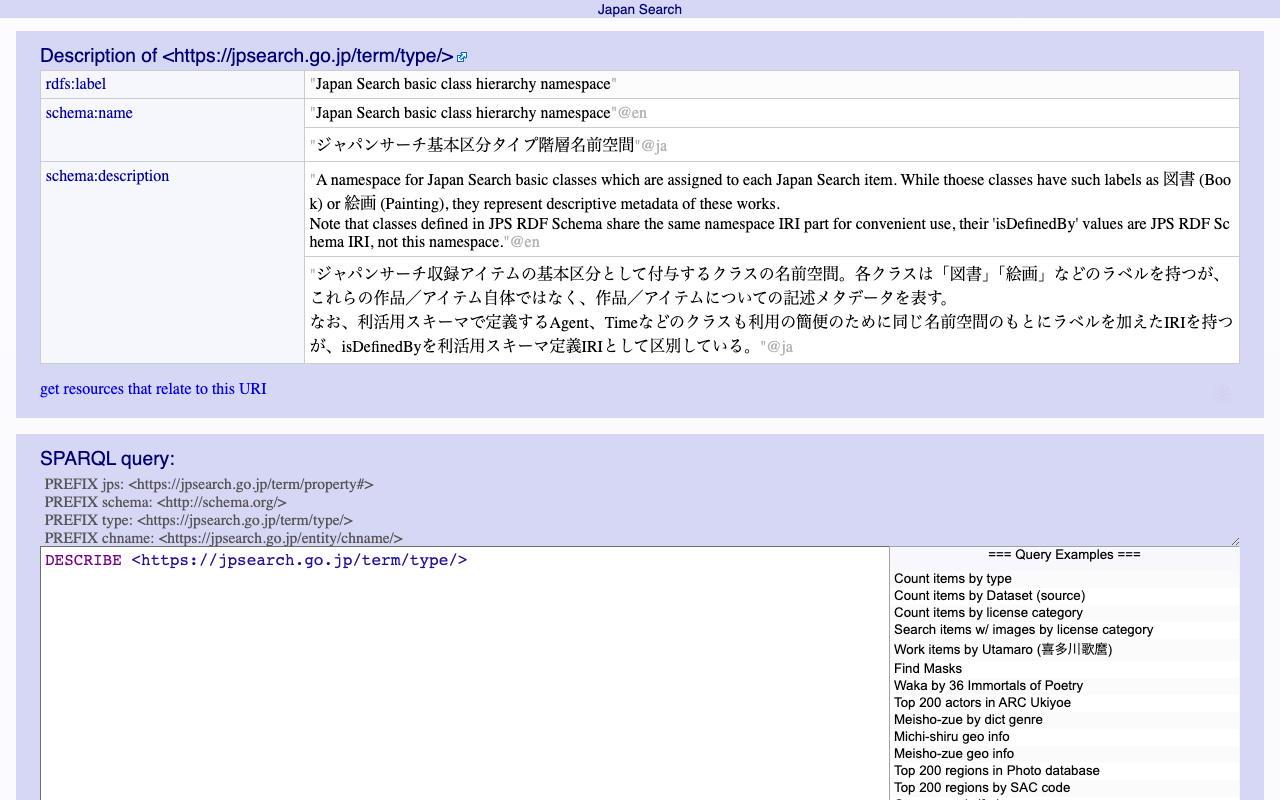
Overview Here are my notes on how to count the number of triples in an RDF store. This time, we will use the Japan Search RDF store as an example. https://jpsearch.go.jp/rdf/sparql/easy/ Number of Triples The following query counts the number of triples: SELECT (COUNT(*) AS ?NumberOfTriples) WHERE { ?s ?p ?o . } The result is: https://jpsearch.go.jp/rdf/sparql/easy/?query=SELECT+(COUNT(*)+AS+%3FNumberOfTriples) WHERE+{ ++%3Fs+%3Fp+%3Fo+. } At the time of writing this article (May 6, 2024), there were 1,280,645,565 triples (approximately 1.28 billion). ...

Using the Course of Study LOD

Using the Course of Study LOD

Overview The Course of Study LOD is described as follows. The Course of Study LOD publishes the content, codes, and related information of the Course of Study and Education Guidelines published by the Ministry of Education, Culture, Sports, Science and Technology as Linked Open Data (LOD). The target for LOD conversion is the latest version of the code tables for all school types of current and former Courses of Study and Education Guidelines (including partial revisions) that are currently published. ...

Using the Media Arts Database SPARQL Endpoint with Yasgui

Using the Media Arts Database SPARQL Endpoint with Yasgui

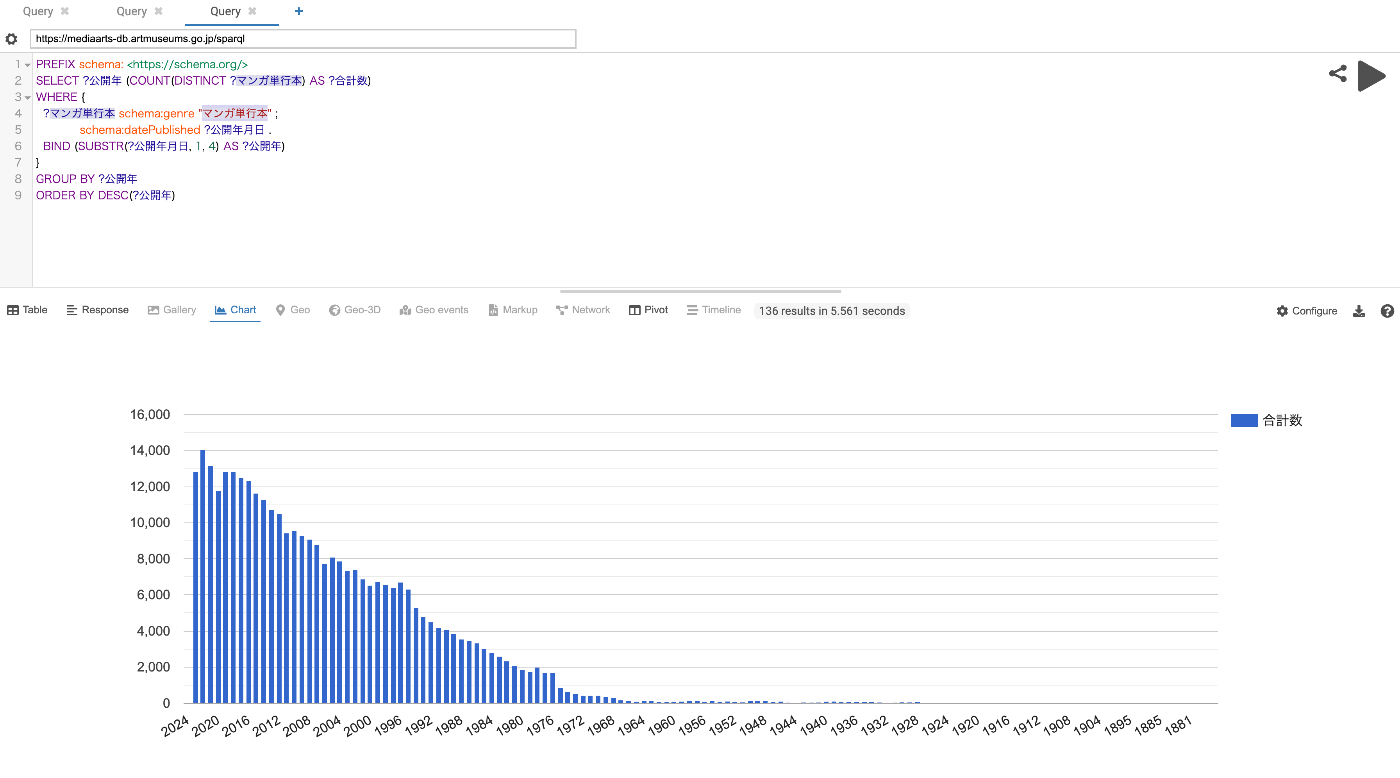
Overview The Media Arts Database was officially released on 2024/1/31. https://mediaarts-db.artmuseums.go.jp/ This article introduces usage examples of the Media Arts Database SPARQL endpoint with Yasgui. I hope the following article about Yasgui is also helpful. Usage Examples Time-series changes in the number of published manga tankoubon (collected volumes) https://api.triplydb.com/s/AqIH1InmC Time-series changes in the number of published game packages https://api.triplydb.com/s/L2REuOshZ Time-series changes in the number of published manga tankoubon containing “isekai” (another world) or “tensei” (reincarnation) https://api.triplydb.com/s/4ciTNJGb2 ...

Visualizing Item Counts by Latest Update Year for the Japan Search Utilization Schema

Visualizing Item Counts by Latest Update Year for the Japan Search Utilization Schema

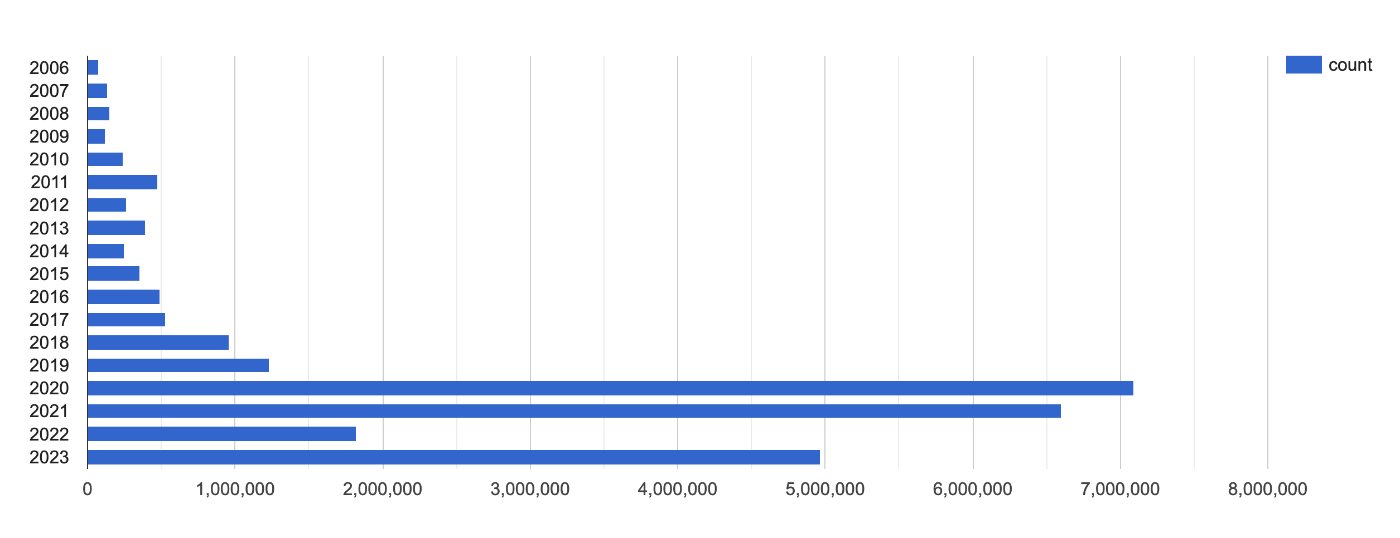
This is a memo about visualizing item counts by latest update year for the Japan Search utilization schema. https://api.triplydb.com/s/bfcE2qF65 It is based on the following query. https://zenn.dev/nakamura196/books/a4534e306de7e7/viewer/e38587 We hope this is helpful.

Utilizing Exhibition Information Stored in the Cultural Japan RDF Store

Utilizing Exhibition Information Stored in the Cultural Japan RDF Store

Overview The Cultural Japan RDF store contains information about exhibitions. A list can be retrieved using the following query, which specifies type:展覧会 (Exhibition) for rdf:type. PREFIX type: <https://jpsearch.go.jp/term/type/> PREFIX rdfs: <http://www.w3.org/2000/01/rdf-schema#> select distinct * where { ?s rdf:type type:展覧会; rdfs:label ?label . } https://ld.cultural.jp/snorql/?query=select+distinct+*+where+{ %3Fs+rdf%3Atype+type%3A展覧会%3B +++++++rdfs%3Alabel+%3Flabel+.+ } ++ This article introduces an example of how to utilize this exhibition information. List of Exhibitions Each exhibition has values such as jps:temporal and jps:spatial (which may have multiple values). https://ld.cultural.jp/data/apmoa-exhib-2021-soga The following query can be used to retrieve a list including exhibition metadata. ...

Obtaining Persistent Identifiers with w3id.org and Redirecting to Snorql

Obtaining Persistent Identifiers with w3id.org and Redirecting to Snorql

Overview I created the following page for publishing RDF data. https://sukilam-educational-metadata.github.io/ In particular, from the following page, you can search RDF data using SPARQL and Snorql. For Snorql, I am using “Snorql for Japan Search”. Please try the query examples at the bottom of the page. https://sukilam-educational-metadata.github.io/snorql/ When publishing this page, I obtained persistent identifiers using w3id.org and set up redirects to Snorql, so this is a personal note for future reference. ...

Investigating Customization Methods for Snorql for Japan Search

Investigating Customization Methods for Snorql for Japan Search

Overview This article presents the results of investigating how to customize “Snorql for Japan Search,” which is used by Japan Search. This document will be updated as needed. Please note that it may contain errors. Menu Changing the Page Title snorql_def.js _poweredByLabel: "Cultural Japan", // "Japan Search", Changing the Query Endpoint snorql_def.js _endpoint: "https://ld.cultural.jp/sparql/", //"https://jpsearch.go.jp/rdf/sparql/", Changing the poweredByLink URL snorql_def.js _poweredByLink: "https://cultural.jp/", // "https://jpsearch.go.jp/", Editing Other Footer Sections ...

Using the Japan Search SPARQL Endpoint with Yasgui

Using the Japan Search SPARQL Endpoint with Yasgui

Overview Yasgui (Yet Another Sparql GUI) provides various advanced features for creating, sharing, and visualizing SPARQL queries and their results. https://github.com/TriplyDB/Yasgui This time, I attempt various visualizations using the Japan Search SPARQL endpoint with Yasgui. Results Table Display I visualize the number of items per dataset. First, here is a standard table display. Result Filtering and sorting of results is also possible. Chart Using the “Chart” tab, I attempt a chart display of the same results. ...

Example of Running SPARQL Queries Against the Japan Search RDF Store Using Google Colab

Example of Running SPARQL Queries Against the Japan Search RDF Store Using Google Colab

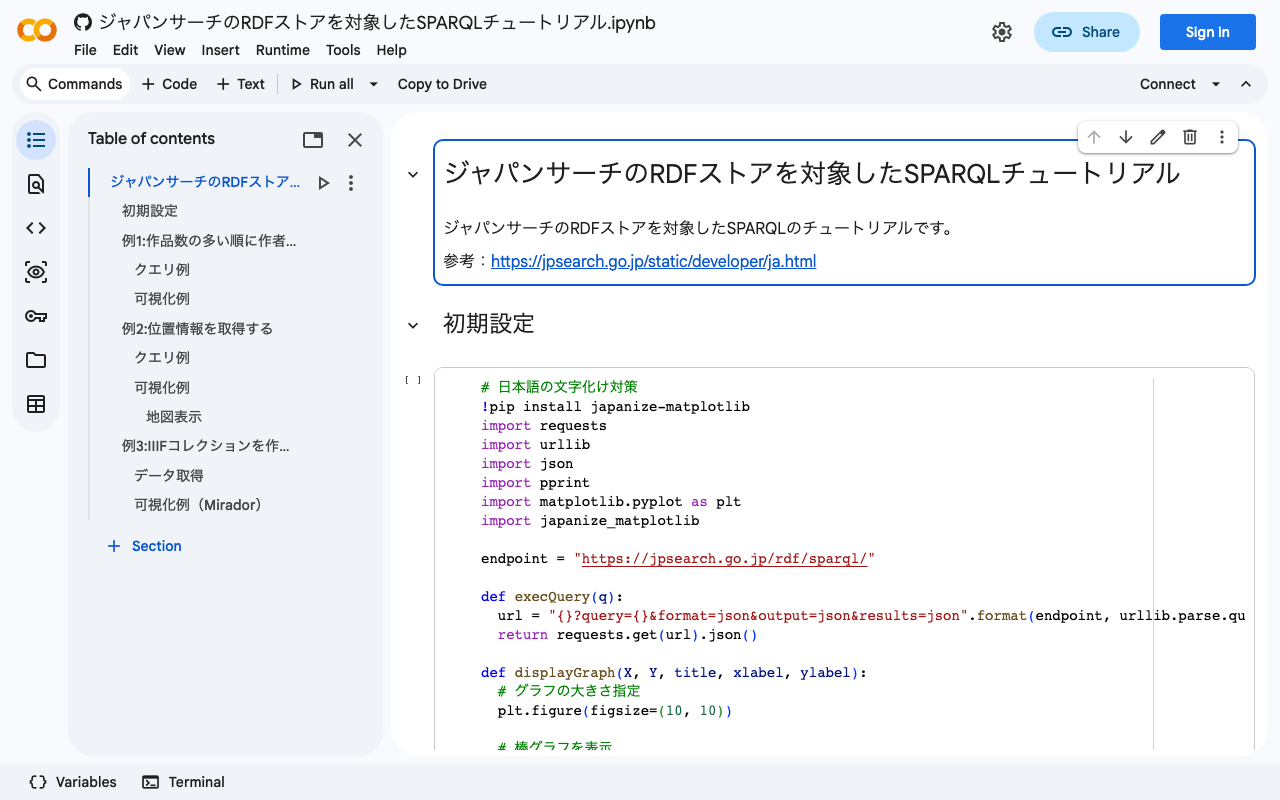
I created a notebook demonstrating examples of running SPARQL queries against the Japan Search RDF store using Google Colab. I hope it serves as a useful reference when using RDF stores with Python. https://colab.research.google.com/github/nakamura196/ndl_ocr/blob/main/ジャパンサーチのRDFストアを対象したSPARQLチュートリアル.ipynb Other reference sites and tutorials include the following. https://www.kanzaki.com/works/ld/jpsearch/ https://lab.ndl.go.jp/data_set/tutorial/