Overview
I developed a viewer for DTS (Distributed Text Services), so this is a memo of the process.
You can try it at the following URL.
https://dts-viewer.vercel.app/ja/
Background
The official page for DTS (Distributed Text Services) is below.
https://distributed-text-services.github.io/specifications/
I also covered this in the following article.
This time, I developed a viewer that partially conforms to this DTS specification.
Usage
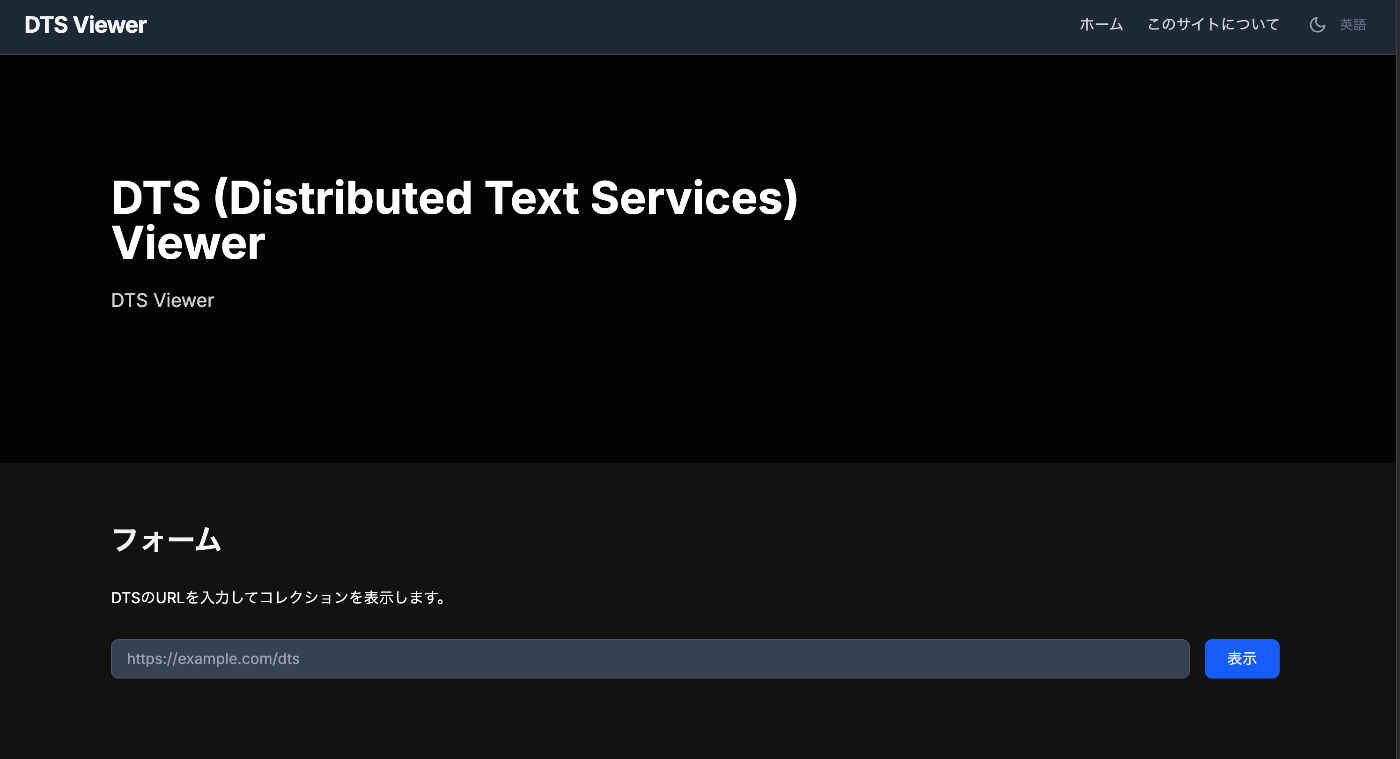
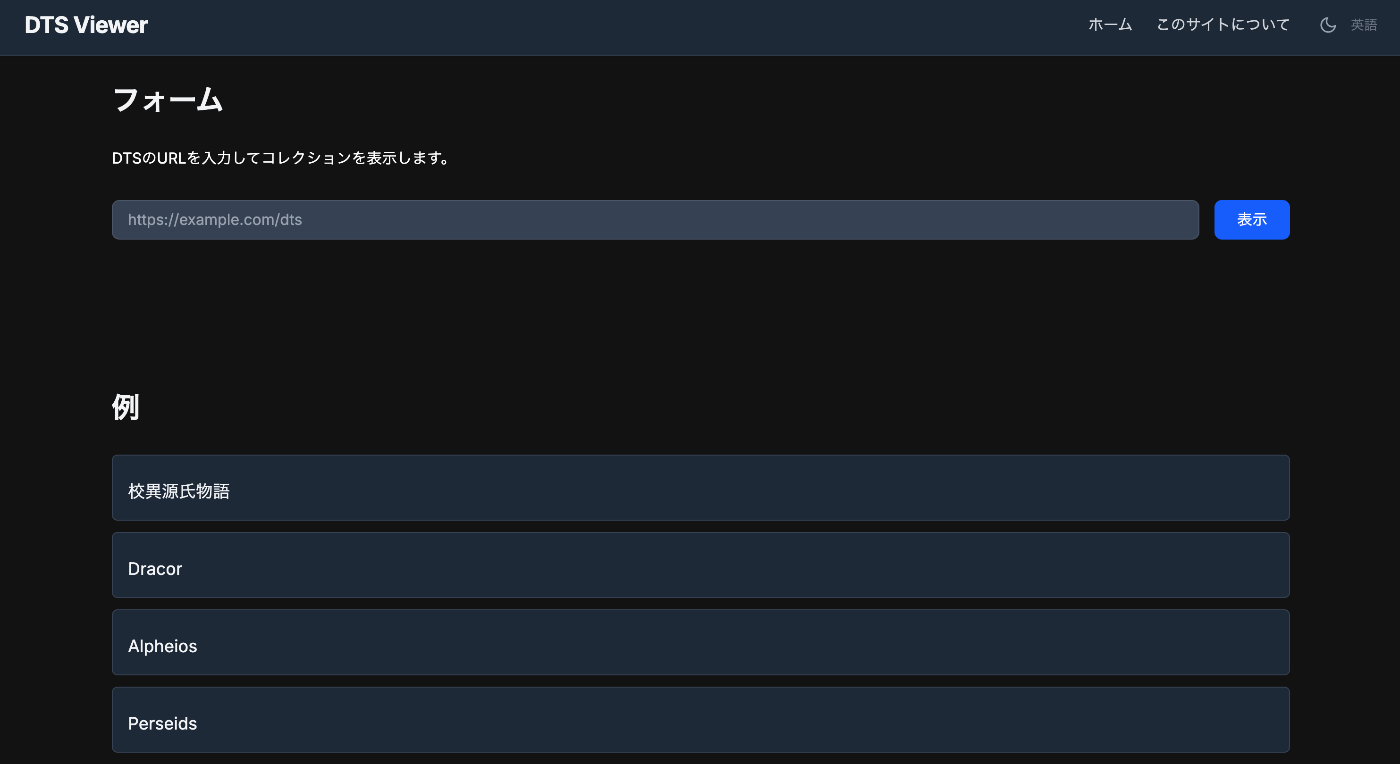
The following is the top page. Enter the DTS URL in the form. Examples are provided at the bottom of the page. Technically, it uses the Entry point.
This is the collection list page. It uses the Collection Endpoint.
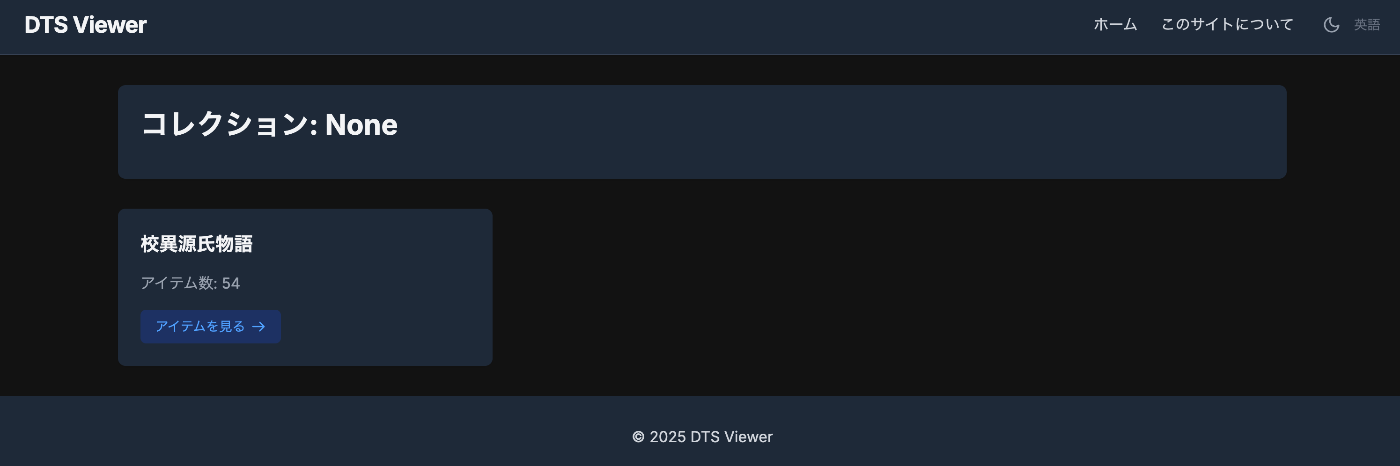
The following API is used as an example.
Following the links takes you to a resource list page like the following.
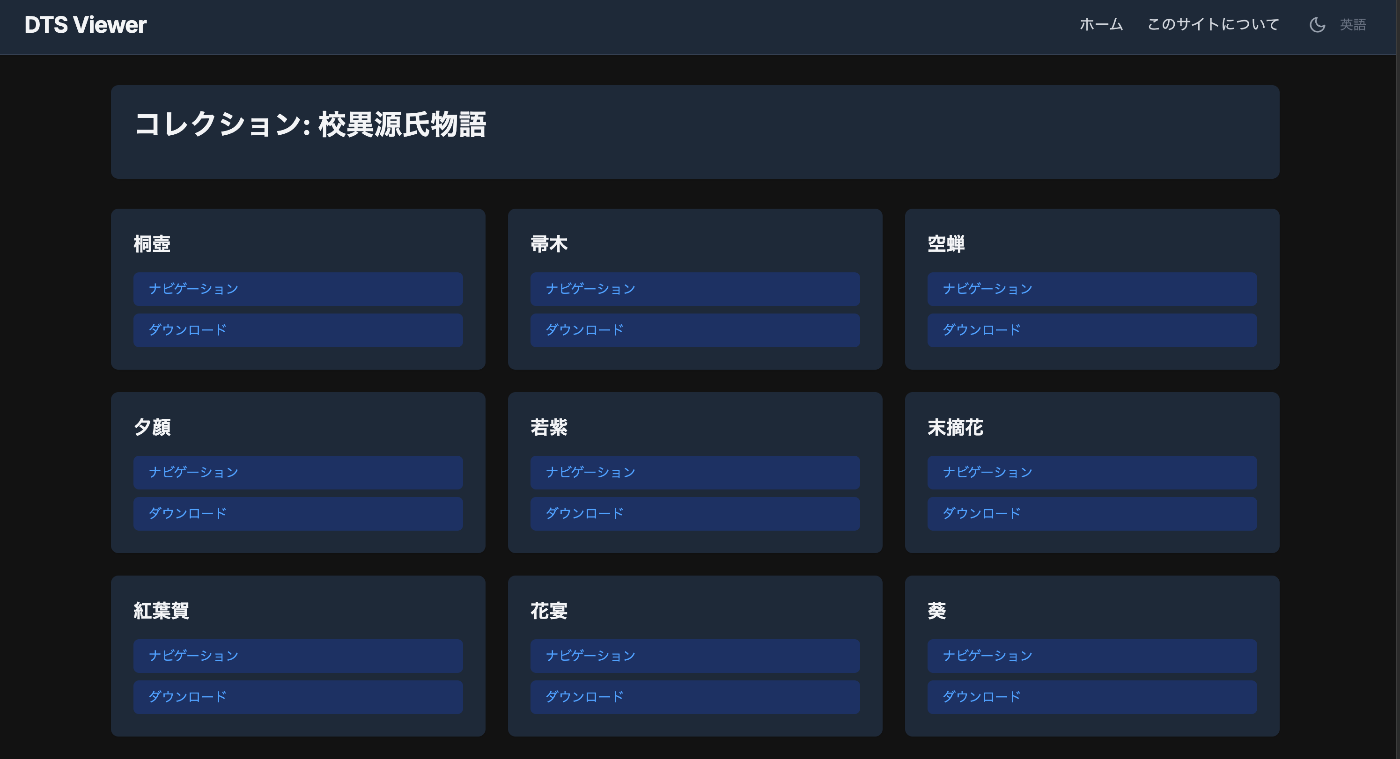
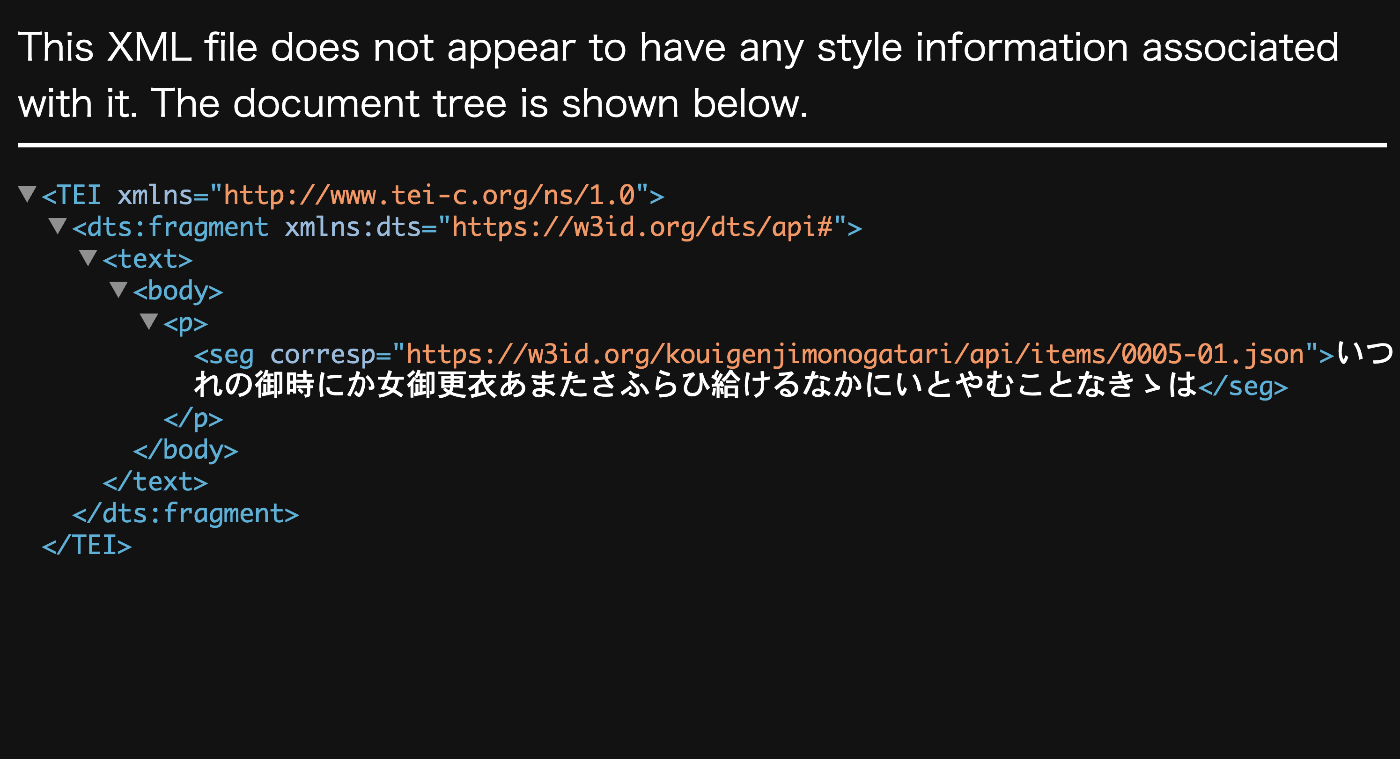
Pressing the download button displays the TEI/XML. It uses the Document Endpoint.
Pressing the navigation button displays a list of accessible sub-texts. It uses the Navigation Endpoint, though multi-level hierarchies are not currently supported.
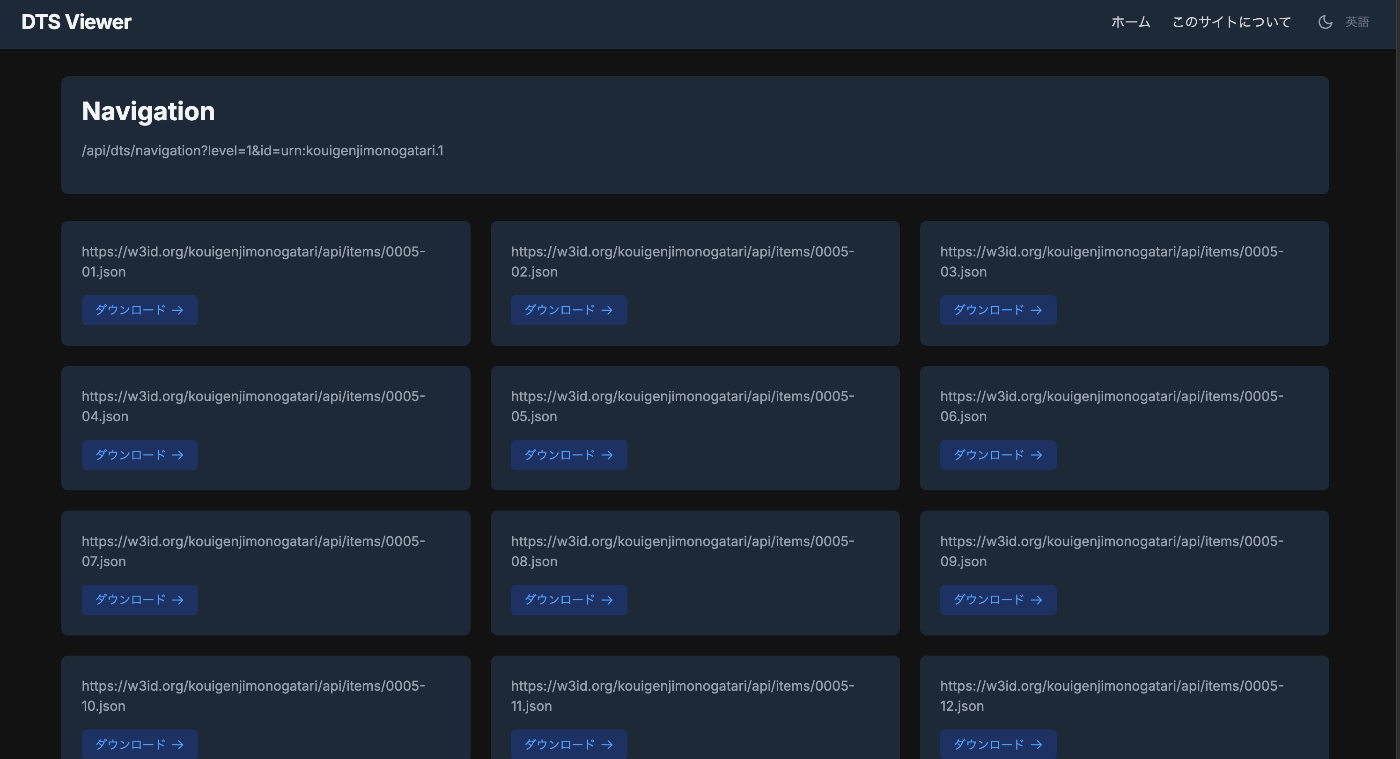
Clicking a link allows you to download a sub-text like the following.
Implementation Notes
The official page states the following.
The DTS Specification is currently in a public comment period following the 1-alpha release
Due to this background, there was variation in how existing DTS descriptions were formatted. Therefore, I internally convert them as much as possible to DTS API (1.0 Draft) format and visualize those results.
As the DTS specification matures, these kinds of issues should be resolved.
Summary
The DTS specification is described as follows.
The Distributed Text Services (DTS) Specification defines an API for working with collections of text as machine-actionable data.
Publishers of digital text collections can use the DTS API to help them make their textual data Findable, Accessible, Interoperable and Reusable (FAIR).
I hope this viewer is useful when publishing TEI/XML files.